Richard Branson has invented his own kind of heaven, and I went there to see how it would ruin me.
Not ruin me the way good whiskey ruins bad whiskey, or the way Hong Kong ruins every other city — I mean ruin me in the surgical sense. The kind that leaves no visible scar but changes the way you stand.
I arrived by motorboat, sun-blind and slightly over-served from the connecting flight, carrying nothing useful and no plan for what came next. The island was ready for me. It had seen my kind before.
Time is a dead god here, some forgotten island deity whose shrines went under in the last hurricane and whose priests now stir rum punch for the hedge-fund elect. Days didn’t pass so much as shed; I found their empty skins in the sand — cigar ash, lime rinds, a bikini top draped over the kind of white chair that makes everything around it look like an apology.
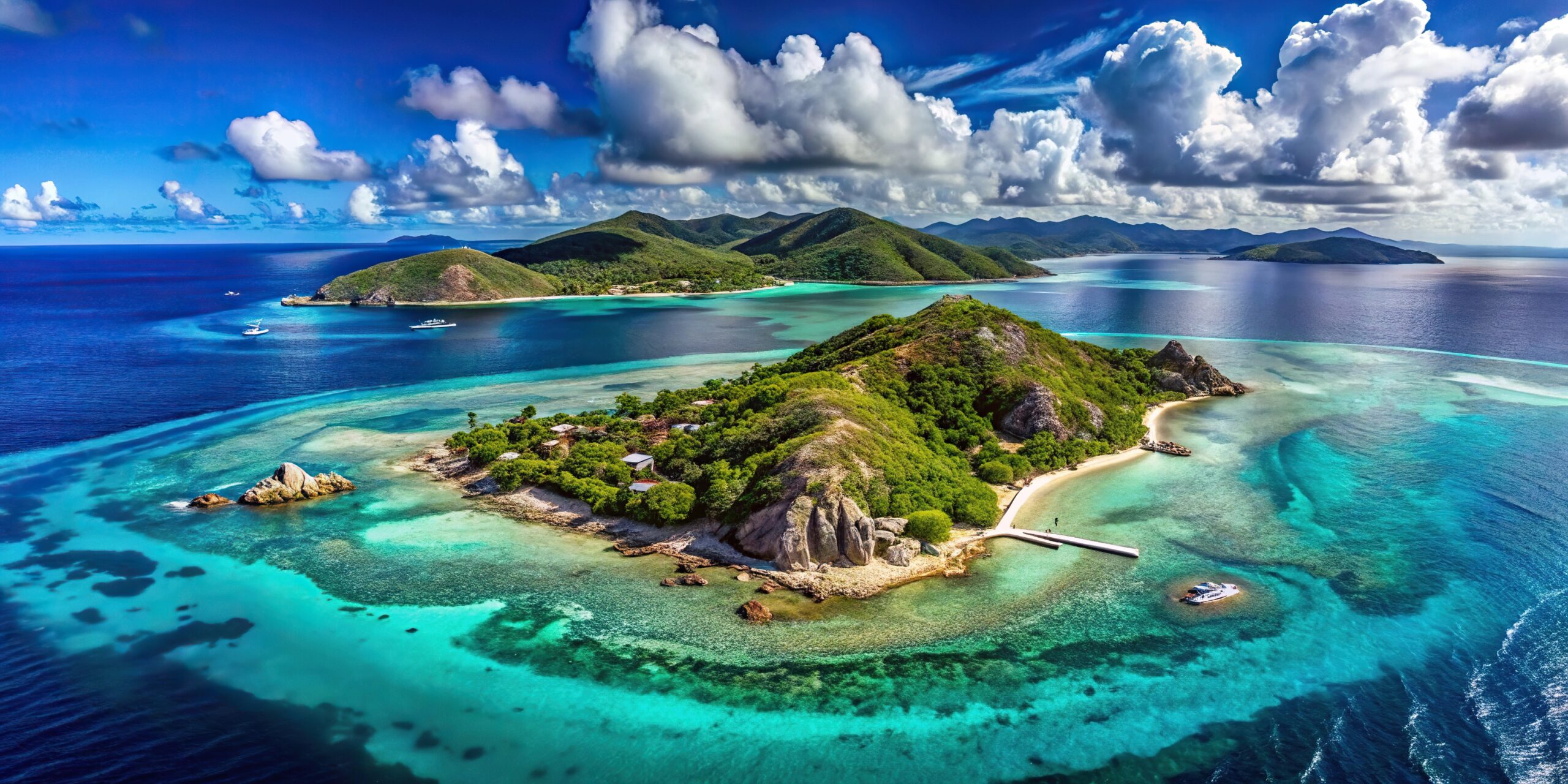
Every morning the sun came up obscene and unforgiving, a naked bulb over a private confession booth, and the sea arrived in all its expensive shades of blue-green, the color of other people’s money. Seventy-four acres. That’s the official number, like this was just real estate and not a very polite hallucination. What it really felt like was one man’s answer to the problem of the world: buy a piece of it outright, bend it into your idea of paradise, and rent admission to the rest of us by the week.
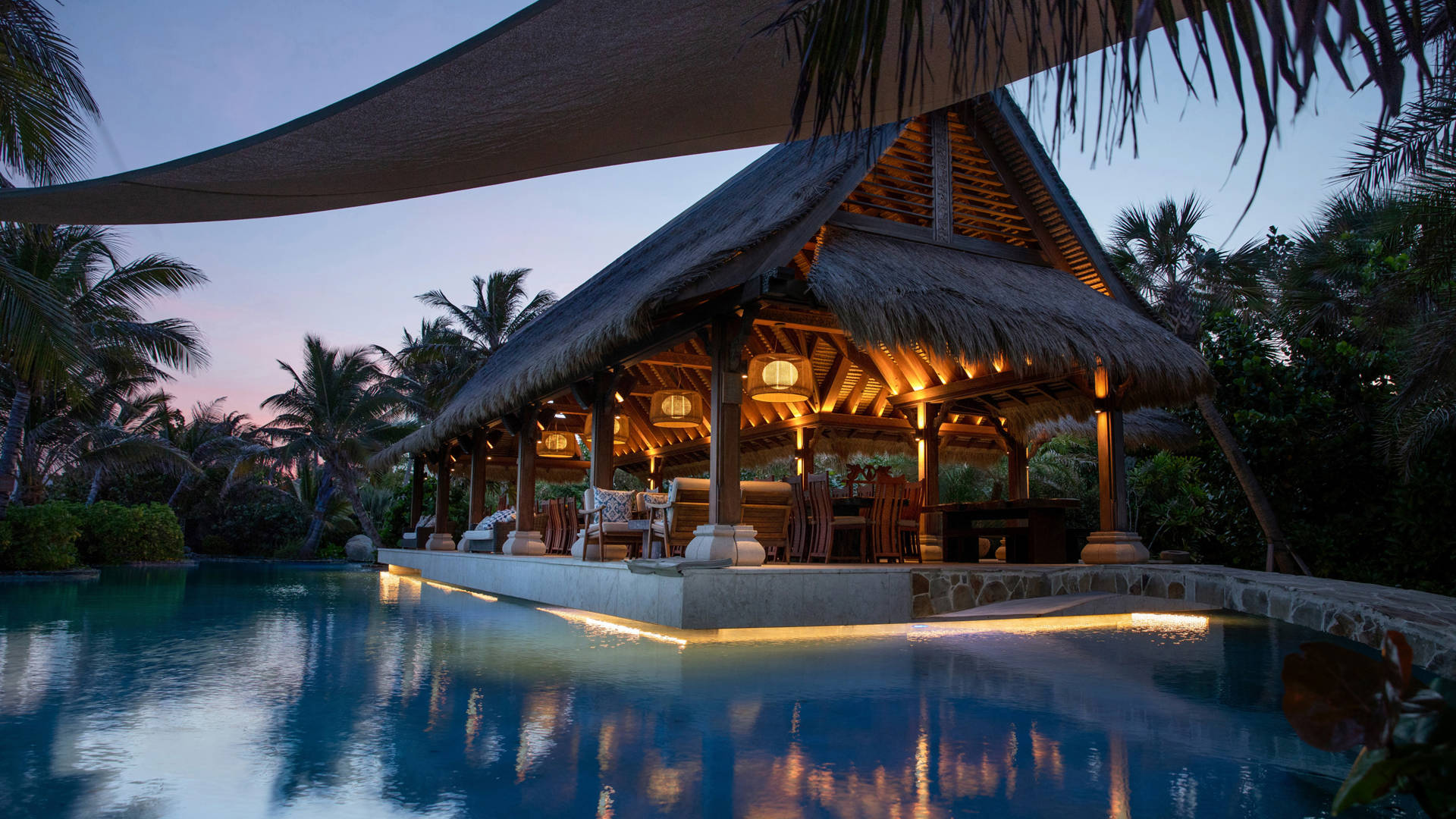
The Great House sat on the hill above me like a mirage with an expense account — Balinese angles, Caribbean air, and Bacchanalian purpose, open to the wind on all sides so there was nowhere for my better judgment to hide. Teak and stone, big white couches that knew more about the sins of the rich than any priest ever would. The ceilings soared high enough that I could have hung my old life from the rafters and let it twist there in the trade winds while I drank something cold and complicated and pretended not to notice. But I noticed. I kept noticing. Because what was happening in front of me — what Branson was doing, day after day, with the same serene animal confidence — was something I didn’t have a word for, and the not-having-a-word-for-it was starting to feel like the whole point.
But even the cynical read started to feel insufficient by the second morning, when I watched Richard Branson walk out of the Great House at seven a.m. in tennis whites, racket in hand, grinning like a man who had solved for X and the answer turned out to be this.
His day was a looped film of work and play spliced so tight you couldn’t see the edit. That’s the thing I couldn’t stop watching, the thing that burrowed in. Tennis first, sun already mean, grin already fixed, chasing balls across the court at the top of the island like a kid who had somehow won the right to stay in recess forever. Then calls — always calls — his voice carrying across the terrace, light and certain, while the British Virgin Islands shrugged below him in forty shades of turquoise. Then lunch barefoot at the beach table, him spearing grilled fish with a fork while sliding in and out of business talk the way other men slide in and out of small lies to themselves. Then windsurfing — the old lion out on the Necker Sound, cutting across the bay in long lazy diagonals, a man who had turned defiance into a leisure sport and never quite stopped. Then more calls. Then dinner.
I stood on the terrace one afternoon watching him come in off the water, board underarm, and felt something I hadn’t budgeted for. Not admiration. Not envy, though envy was in the vicinity. Something closer to recognition — the particular sting of seeing someone live the answer to a question you’ve been avoiding. The seam between his work and his life was not hidden. It did not exist. He had not found balance. He had abolished the distinction. And I was standing there with a drink in my hand and the ghost of a hundred unread emails haunting my shirt pocket, and I understood, with a clarity that felt almost violent, that I had never once stopped being afraid of my inbox.
My casita sat a short walk from the main house, down a pin-lit path that bent and disappeared like it was reconsidering itself every few feet. The lights were small, low, just enough to keep you from breaking your neck, not nearly enough to make you feel safe. Giant lizards owned that path. (if you like lizards) They lounged in the warm dust and on the stones, prehistoric little landlords who watched me weave by each night with bloodshot eyes and a drink I didn’t need but wasn’t putting down. They stared, slow and nonchalant, as if to say: You’re the temporary animal here, not us. Then, when they were good and ready, they slid off into the dark, leaving me to follow the lights toward my borrowed life.
By the time we all gathered for dinner in the Great House, Branson was fresh as a new sin — relaxed, refueled, jovial, the gracious pirate captain welcoming us aboard his floating kingdom for another night’s soft plunder. They called him Richard. Everyone did, immediately, as if the island itself had briefed them on arrival. This was his home, and in his home there was no other register available. Later the lanterns and fairy lights flicked on and the whole hill glowed like a very gentle apocalypse. I’d drift up to the bar already a couple of rums ahead of my better self, watching the staff move through the scene like friendly spirits — drinks appearing I didn’t remember ordering, plates arriving, chairs pulled out as if the island itself wanted me seated, softened, and quiet. Nobody rushes on Necker. It is the one house rule the island enforces without posting it anywhere.
One night — I couldn’t tell you which one — he came in barefoot while I was studiously navigating a flight of local rums. Necker eats days the way a fire eats paper; it all curls at the edges and goes black the same. He was tanned, loose, dressed like a man whose remaining vice was pretending he didn’t have any left. I’d seen that grin a thousand times in Heathrow kiosks and airport bookshops, on the covers of glossy business fantasies stacked next to the boarding gates, but in his own house he looked less like a mogul and more like a well-kept pirate who had cut a deal with the crown instead of the hangman.
“Having fun?” he asked me, like he’d caught me with my hand in Nirvana’s cookie jar. “I’m not sure fun is the right word,” I said. “I think the word is complicit.” He laughed — the laugh of a man who has successfully converted every mistake of his youth into an amenity — and clapped me on the shoulder like we’d both come up the hard way and only one of us had done the math correctly. Then he looked at me, the way you look at someone when you think they might be getting it, and he said: “Just make sure you leave more tired than you arrived. Otherwise I’ve done something terribly wrong.” He moved on. The bar swallowed him. I stood there with my rum and understood that he wasn’t talking about jet lag.
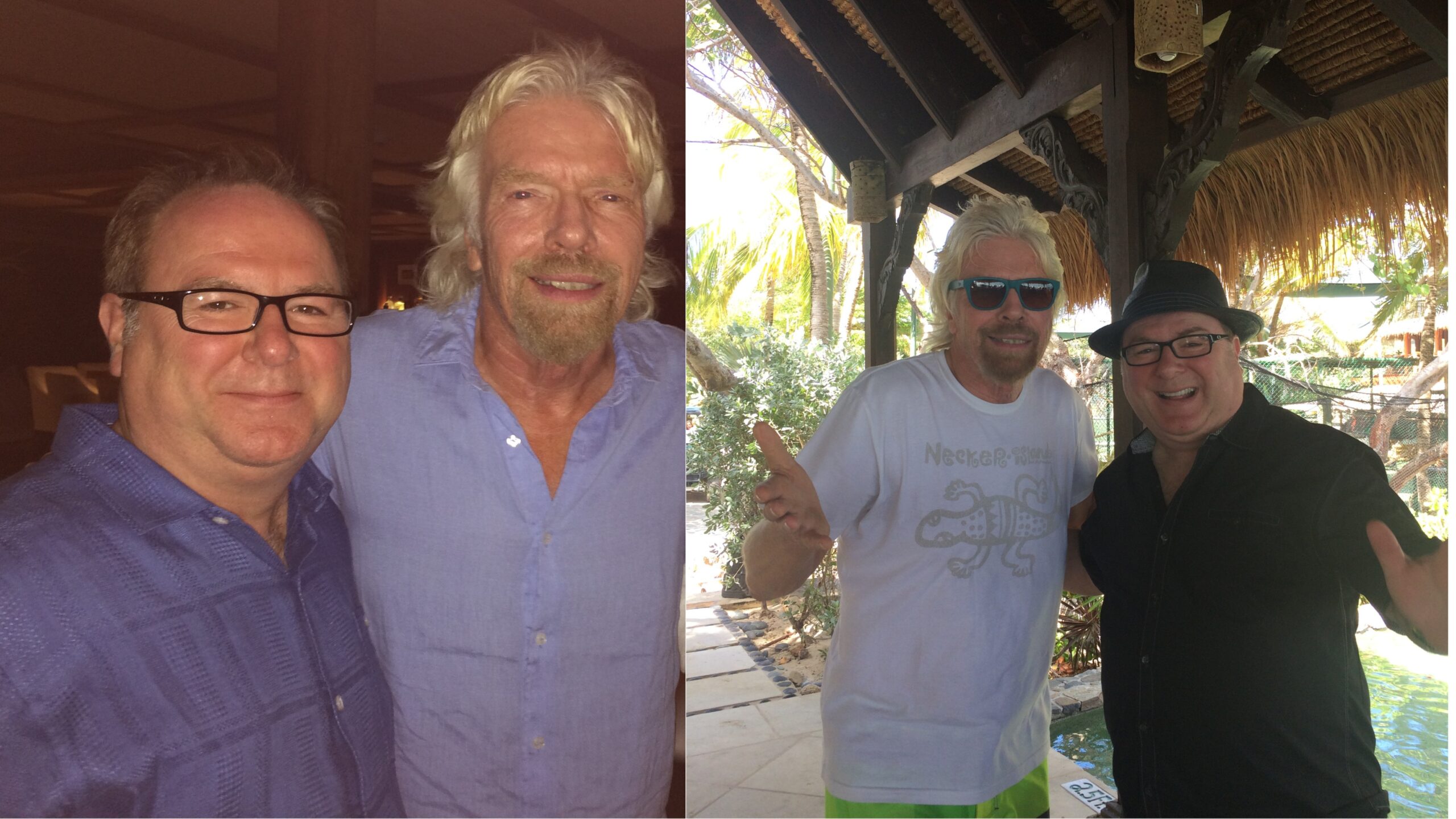
People orbited him with that mild, practiced desperation I’ve only ever seen around famous men and mezcal. Start-ups, foundations, some app that would disrupt the way other people suffered — everyone had a pitch holstered behind their small talk. He listened, nodded, diverted them into zip-lines, kite-surfing, tequila on the beach at midnight. He understood the first commandment of this place: salvation is fine for sermons; repeat business belongs to pleasure.
Somewhere between the Virgin Gorda day trip and the third consecutive sunrise I’d watched without checking the time, I reached into my pocket and my hand found the phone and I stopped. I hadn’t checked it in two days. Not a virtue, not a digital-detox achievement to post about later — I mean I had genuinely forgotten it existed. The Dow Jones, the FTSE, whatever front line was moving in whatever war, whatever fresh disappointment democracy had queued up — all of it had continued without my supervision, as it always does, as it always will. The flicker of panic came first — real panic, the kind that tells you something is wrong with you. Then came something worse than the panic: relief. Pure, shameful, clarifying relief. That was when I understood what Branson had actually built here, and it wasn’t a resort. It was a proof of concept.
Night after night the island worked its trick: convincing me that life, properly arranged, was nothing but a long, lavish house party where the music never quite peaked and nobody ever flipped on the ugly lights to show you what you’d spilled. There were no visible clocks, no discreet signs about breakfast hours or checkout times — just the next drink, the next game, the next plunge into warm salt water that tasted faintly of baptized guilt. Time, that old landlord, had been bought out and walked off the property without a severance package.
I left on a Tuesday. Or a Wednesday. The launch took me back to Beef Island Airport — a small terminal, a single gate, the smell of jet fuel and duty-free rum cutting through the heat. I turned my phone on in the departure lounge. Notifications bloomed across the screen like mold on something left too long in the dark. I stood there and looked at it, and for the first time in longer than I could honestly remember, I didn’t feel the old urgency. Branson’s line was still in my head: leave more tired than you arrived. I was. But it was the good kind of tired — the kind that comes from having been briefly, unexpectedly convinced that another version of your life is not only possible but available, if you’re willing to stop treating the one you have like a problem to be solved. The island doesn’t ruin you because it’s paradise. It ruins you because it reminds you that you already have everything you need to build your own. I put the phone in my pocket, boarded the plane, and for the first time in years, I didn’t feel like I was running late for something.
.
Where it is: Necker Island, Sir Richard Branson’s 74‑acre private island in the North Sound of the British Virgin Islands, ringed by reefs and white‑sand beaches.
How to stay: Book either an individual room during selected “Individual/ Celebration Weeks,” or take over the entire island on an exclusive‑use basis.
Capacity: Up to 56 adults plus 14 children across the Great House, Balinese houses, and bunkrooms when taken exclusively.
What’s included: All‑inclusive setup: luxury accommodation, all meals and drinks (including alcohol), most watersports (even motorised), boat transfers from Virgin Gorda or Beef Island, plus a full staff to run the island.
Sample rates:
Individual rooms on Celebration/holiday weeks have recently started from about 5,150–5,850 USD per night for two, fully inclusive.
Whole‑island buyout has been quoted around 105,000 USD per night depending on dates and headcount.
How to book:
Direct: virginlimitededition.com → Necker Island → “Individual stays” or “Exclusive use,” or email enquiries@virginlimitededition.com.
Points nerds: Flying Club / Virgin Red members can redeem points for a 7‑night all‑inclusive stay for two; availability is limited and must be arranged via Virgin Limited Edition and Virgin Atlantic Flying Club.
By TH