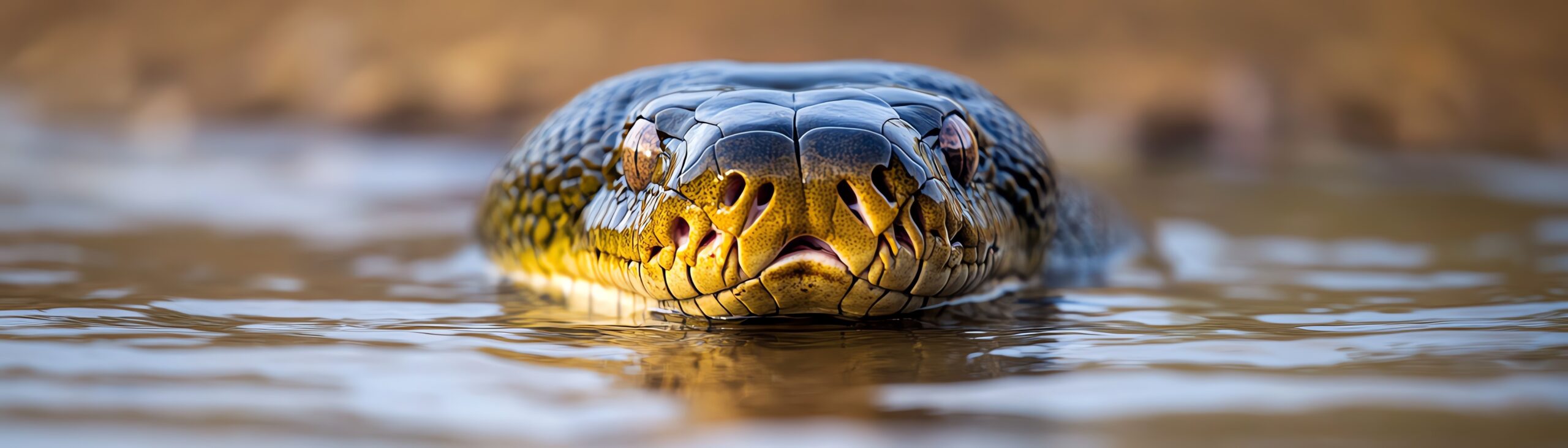
In 2024, scientists discovered the largest species of snake on earth: the green anaconda, in the Amazon rainforest. Nicknamed Ana Julia, this serpent was measured from head to tail at 20.8 feet and weighing in at 440 pounds.
This was not news to everyone. Among the old nations from Colombia down through Ecuador into Bolivia, the anaconda is not just a snake but the first mover, the long, coiled architect of all things—the river‑ghost that slid through the jungle’s hot murk laying down the courses of water and the sites of men, dropping villages the way a god might drop cigar ashes, deciding who would live where, who would drink, who would look up and name the stars beyond the black mouth of the sky.
The aboriginals call it the water mother, and you feel that in the way people move when the river comes up, in the way they talk about which bank you can fish and which you leave alone. There are dances, stories, half‑sung rules passed around a fire about sacred coves and places you don’t cut trees, about stretches of water you don’t piss in if you know what’s good for you. None of it’s written down, but as long as the real snake still ghosts through those feverish backwaters, the ancient system holds. When the anaconda goes, those rules go with it, and something old and exact and necessary just rots into the mud.
That’s why a journey to Ecuador’s Amaruncocha jungle is so important. The search for the great anaconda is not the stuff of some crappy B movie (well, shouldn’t be), but a vital part of preserving the rainforest ecosystem and indeed the balance of life on this small blue marble. Your well-reasoned and well-planned trip to the region isn’t a boondoggle, it can actually make a world of difference.
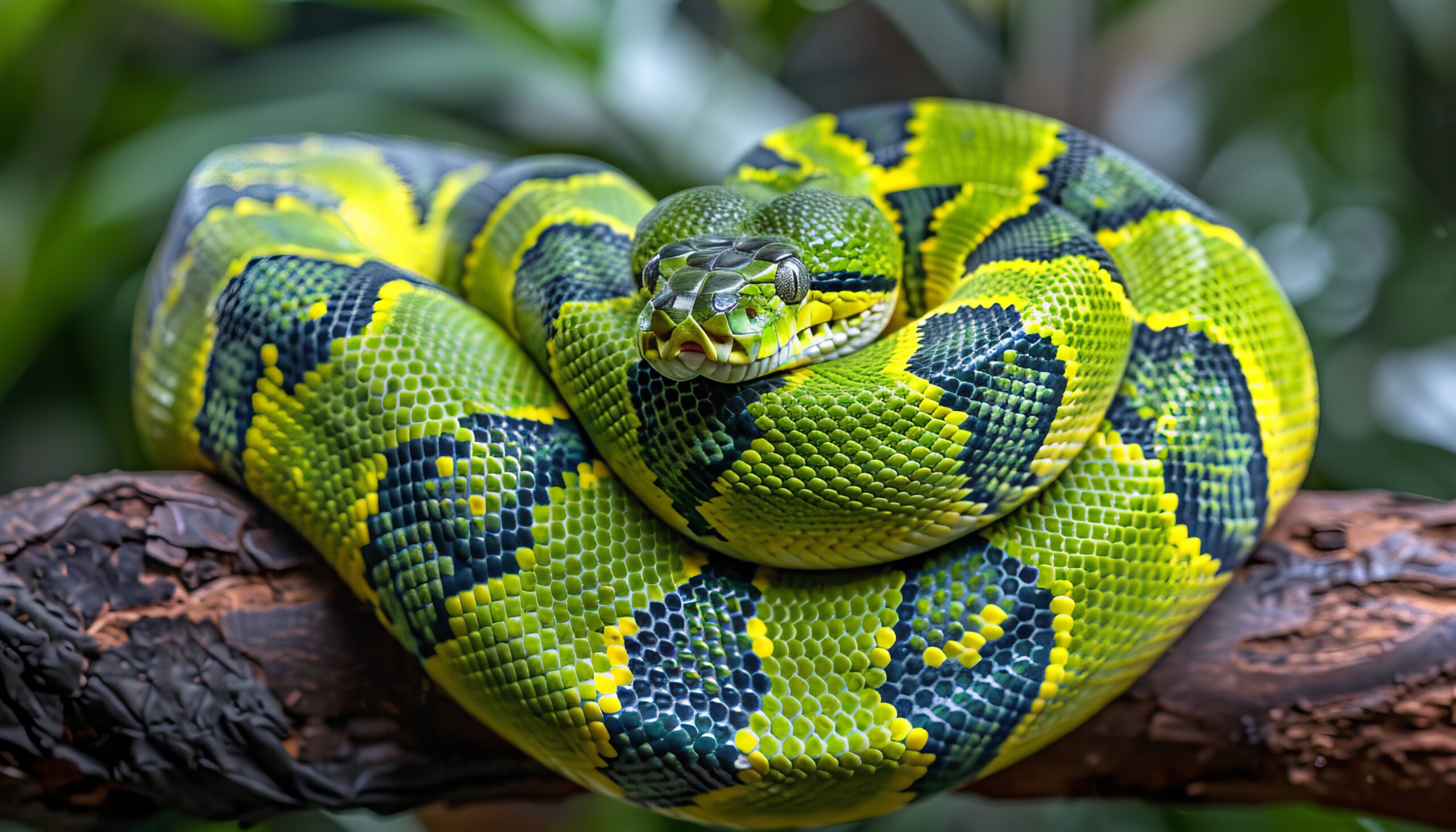
Ecuador is a small, equatorial country on South America’s northwest shoulder. Ecuador’s terrain is famously varied for such a small country, ranging from high volcanic Andes to dense Amazon lowlands and offshore islands. This diversity is often described as “four worlds in one country.”
Anaconda are huge, non-venomous constricting snakes. They live in swamps, marshes, flooded forests, lagoons, and sluggish streams and rivers where dense vegetation and murky water provide cover.
Green anacondas sit at the top of the food web, regulating populations of fish, waterbirds, capybara, caiman, deer, and other vertebrates, which stabilizes entire floodplain ecosystems. Their presence and abundance signal intact, productive wetlands; when top predators like anacondas decline, it often reflects deeper damage from pollution, dams, overhunting, or climate‑driven hydrological change. Like all living creatures, flora and fauna, the anaconda is under duress and in danger from land developers, tree harvesters and ruthless poachers.
Every so often, a team of biologists, river rats, and intrepid adventurers comes staggering back out of the green quagmire with leech bites and camera cards full of proof: a thick green body sliding across some forgotten oxbow, a coil in a drowned grove where cattle used to drink. And for that one lagoon, that one meander, it’s a tiny stay of execution. Another line of defense against the inevitable sales pitch for draining, damming, drilling, or burning it all down. A signature in flesh and scale that says: not this bend. Not yet.
So where do you fit in this story, flying in with a dry‑bag and a head full of jungle dreams? If you pick your company right—operators who answer to the communities on these rivers, who think long‑term instead of “10 Snakes You Won’t Believe We Found!”—your money becomes a small vote for keeping the water mother’s house standing. You ride in their boats, sleep in their camps, listen more than you talk.
If you go with conservation‑minded outfitters and Indigenous or local guides, your money and attention can support territories and wetlands where anacondas still thrive, reinforcing economic arguments against destructive extraction.
Photo‑backed encounters, GPS notes, and habitat observations—shared carefully with researchers or credible citizen‑science platforms—can refine distribution data, highlight important lagoons, and flag new or recovering hotspots.
Every solid encounter—with photos, measurements, tissue samples, and local knowledge—sharpens maps of their true range, highlights new strongholds or collapse zones, and strengthens arguments to defend specific rivers, swamps, and Indigenous territories from extraction.
You bring a camera, sure, but you treat it like a notebook, not a trophy gun. A clear photo, a rough length estimate, a few coordinates scribbled in a damp field book—passed quietly to the people who actually track these things—can help redraw the edge of the anaconda’s world. It can light up an unknown lagoon on someone’s map, or confirm that a place everyone thought was dead still has one big, patient heartbeat under the hyacinths.
And that’s the real hustle: every honest encounter, every set of numbers pulled out of the muck and sweat, sharpens the lines. It shows where the giants are holding out and where they’ve already lost. It arms the people arguing in faraway rooms for this river, this swamp, this stretch of Indigenous land. Out here, the anaconda is more than a monster. It’s evidence. It’s leverage. It’s the closest thing these rivers have to a lawyer that can’t be bought.
In places like Yasuní and along the Tiputini River, the hunt for these snakes looks nothing like television. You sit in a canoe that smells like fish and gasoline, drifting past trees that sweat. Most days, you get otters, herons, too many mosquitoes, and a fever dream of green. Once in a while, you get the thing itself. Stations like Tiputini turn those few seconds into data—photos, GPS points, notes on water level and weather—and ship them off to labs and offices far away, where people feed the numbers into models and fight quiet little wars over which swamps get to live.
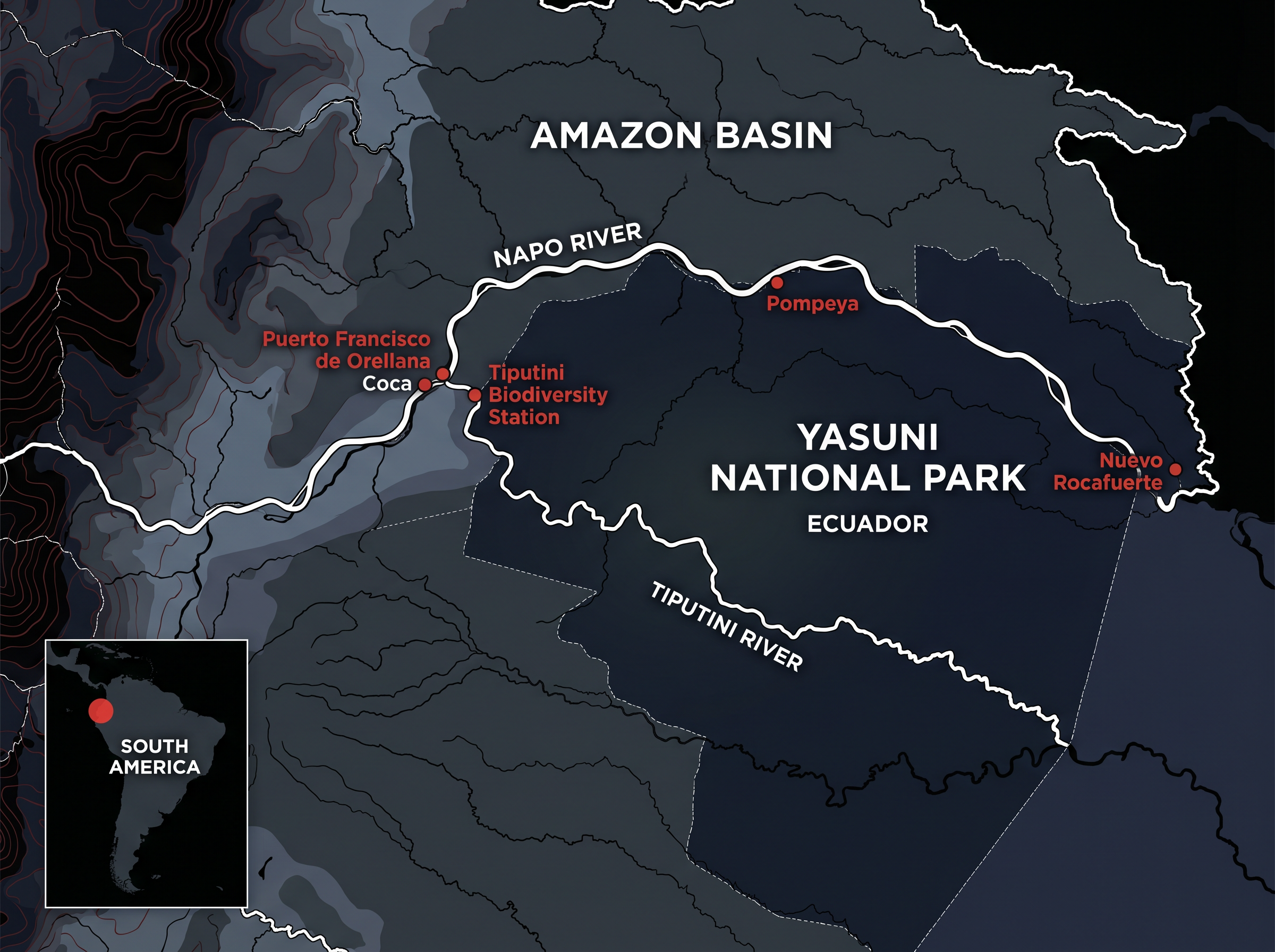
A week on the Tiputini is less a tour than a slow-motion dare. You fly out of Quito’s thin air, drop into Coca’s river heat, and trade pavement for brown water and Waorani country where the maps get vague and the jungle stops caring who you are.
Days blur into a pattern that feels almost religious: up before dawn, paddling blackwater lagoons so still they look like spilled oil, scanning the reedlines for anacondas thick as your leg and otters that hunt like a pack of drunks with knives. Midday is hammocks, sweat, and the low hum of insects drilling into your skull, waiting for the sun to loosen its grip so you can go back out and try again.
You move camps downriver, swapping lodge beds for crooked tent platforms and riverside clearings where the night sounds come right up to the flysheet. There are quick, careful visits with Waorani when invited, and long, silent runs down side channels where you follow capybara tracks, shed skins, and the gut feeling that something big and unseen is watching the boat.
Amaruncocha—the Lake of the Anaconda—is the centerpiece and the test. You push through narrow, dark corridors in the half-light, slide onto the lagoon just as the sky switches from black to bruised purple, and work the edges slowly, bow practically buried in the vegetation. Some days the snakes show; some days they don’t. The river never promises you anything.
Why This Will Mess With Your Head (In a Good Way)
It shifts the anaconda from B‑movie monster to keystone neighbor, a top predator that literally holds wetland worlds together.
A week of brown water, night noises, and unseen movement recalibrates what “wild” means; city life feels like a padded cell when you come back.
Every legitimate sighting becomes evidence—data points that help defend specific rivers and lagoons—so your story isn’t just “I saw a giant snake,” it’s “I helped prove this place still lives.”
Base yourself on the Tiputini, push hard one day to Amaruncocha, and spend the rest of the week slipping in and out of blackwater lagoons at the edges of Waorani and Kichwa country, where the river runs slow and the snakes don’t.
Day 1 – Into the river
Day 2 – First blackwater
Day 3–4 – Waorani water, Amaruncocha
Day 5–6 – Second chances, way out
Choose camp and water like a coward
Pitch tents or pick lodges back from swampy, plant‑choked margins; dry, open ground is safer than lush edges where ambush predators hunt.
Let locals lead
Move through flooded forest and side channels only with experienced local or Indigenous guides, and follow their “no‑go” calls even when a channel looks calm and photogenic.
Respect prime snake zones and hours
Stay out of shallow, weedy margins at dawn, dusk, and night unless you’re in a boat; avoid wading blind through murky water or floating mats where you can’t see your own feet.
If you see one, back out early
Treat any anaconda inside your comfort bubble as a hard stop: back away steadily, give basking snakes a wide berth, and never poke, grab, or close in for a hero shot.
If it actually grabs someone
Survival depends on fast, coordinated help: friends work together to free chest and airway and peel coils, not on solo wrestling; your job is to keep breathing, not to reenact movie nonsense.
Location: Tiputini River and Amaruncocha (“Lake of the Anaconda”) on the edge of Yasuní National Park, eastern Ecuador, in Waorani and Kichwa territory.
Season & Timing: Amazon trips run year‑round; most anaconda‑focused expeditions stack multiple dawn and dusk sessions over 5–7 days to work blackwater lagoons when snakes are most active.
Cost: Multi‑day Tiputini/Yasuní expeditions typically run from roughly 1,500–3,000 USD per person depending on length, lodge vs. tent nights, and how private your group is, usually including guiding, river transport, and meals.
What You’re Actually Doing: Basing on the Tiputini, then creeping by canoe and kayak into blackwater lagoons like Amaruncocha at first and last light, scanning reedlines and flooded forest for massive green anacondas and the rest of the food chain that fears them.
Good to Know: This is hot, wet, leech‑friendly jungle country with basic camps, long river days, and zero guarantees—experienced local/Indigenous guides are non‑negotiable, and any snake encounter is a bonus, not a promise.
By TH