They told us the building was clear.
That was the first lie.
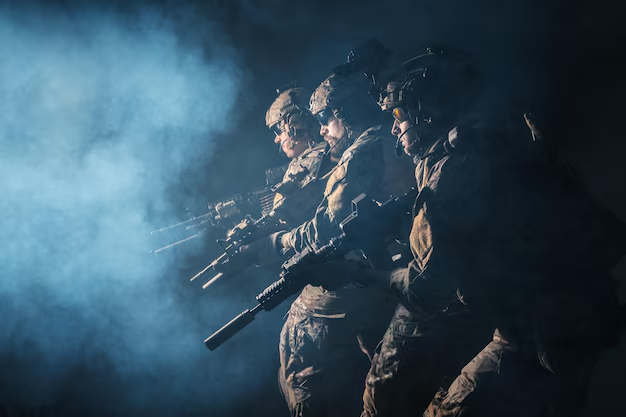
Second floor, third room on the left—boots slipping on spent casings, lungs burning, the hallway stinking of cordite and cheap plywood. Liability was on point because no one else volunteered, a shaky silhouette in front of me, rifle shouldered, barrel wobbling just enough to make every instinct scream. Somewhere ahead, beyond that flimsy next wall, came the muffled pop-pop-pop of sim rounds and the flat, unhappy voice of a man who had seen real buildings like this fall down for keeps.
“Move, gentlemen. The paper’s not shooting back.”
We flowed past a smashed doorframe into a box of a room that stopped being a room and turned into a strobe of motion and shouting. Targets where there hadn’t been targets. Shapes in the corners. The smack of a round kissing plywood six inches from my face. I flinched, stepped wrong, felt the hard jab of plastic and compressed air slap my ribs.
“Who owns that corner? Who owns that corner?”
For half a second I didn’t know if he meant me or the man I’d just failed to cover. Then it didn’t matter, because the stack was pushing on and the only thing worse than getting shot was becoming the clog in the artery.
By the time we stumbled back into the sun, helmets askew and shirts pasted to our backs, the instructor had that particular look—amused, disappointed, faintly murderous.
“That,” he said, “was terrible. Again.”
That’s how a nice, normal weekend getaway in San Diego really begins: not with a welcome cocktail or a smiling concierge, but with a grown man in tactical pants telling you you’re going to run the kill house until you stop acting like tourists. This Rat Pack Weekend was like playing Halo on Legendary, except it was real life and your mistakes left bruises instead of reload screens.
Only later, when the welts start to bloom and the adrenaline rinses away in the shower, do you remember that forty‑eight hours earlier this was just a group‑chat fantasy: fly to the coast, play soldier for a couple of days, drink like you survived something. But it doesn’t start with drinks. It starts here.
San Diego, from a distance, looks like a postcard somebody oversaturated for a chamber‑of‑commerce pitch—palm trees, cruise ships, expensive dogs whose owners never seem to sweat. Up close, on the right slab of dusty ground outside the city, there’s a place where the fantasy breaks, where the sky is the same blue but the air tastes like cordite and your heart learns a new rhythm.
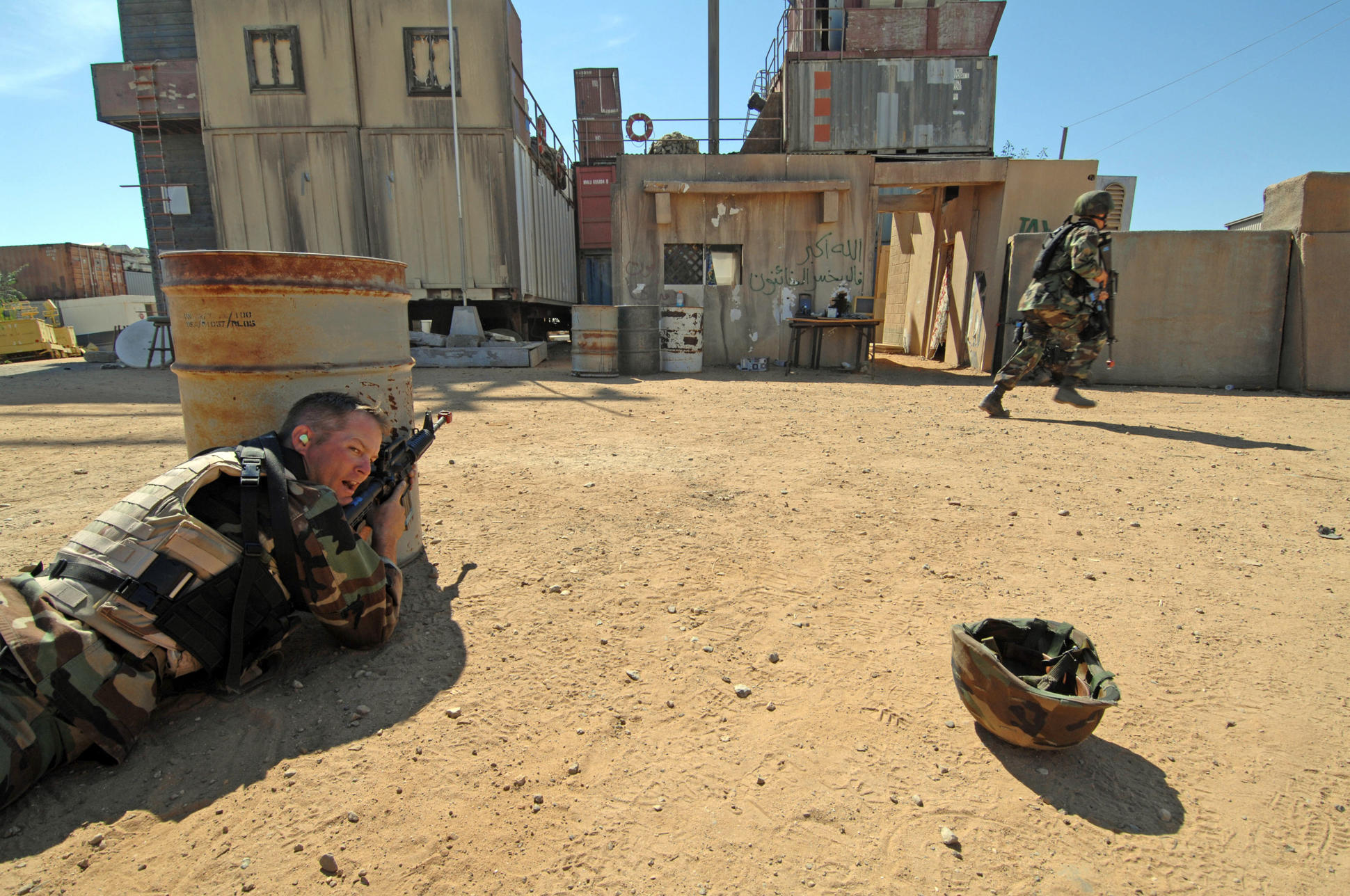
They call it Covert Ops SD, and it runs on a sprawling training complex that has put more than 700,000 real troops through their pre‑deployment paces. You’re not on a movie backlot; you’re on the same kill house, mock hospital, and ranges actual warfighters use to rehearse the ugly end of the world. One‑day “missions” start around 1,950 USD per person, with real weapons, simulated ammo, and longer custom packages if you want the full three‑day immersion.
You show up early, bleary‑eyed from a too‑late night and hotel coffee that tastes like it was brewed through a gym sock. The parking lot is a silent parade of middle‑aged fantasies and quarter‑life crises—trucks and rental sedans lined up under the same hard sun. Men, mostly, doing private math between what they think they are and what they’re about to find out.
Then the SEALs walk in.
There’s a particular look to people who’ve seen some things and decided not to brag about it. No chest‑thumping, no speeches. Just a quiet, matter‑of‑fact presence, like bartenders who’ve watched a thousand nights go wrong and don’t need to explain. They talk safety. They talk responsibility. They talk about how the weapons are real, the ammo is simulated, and the stakes don’t stop at “fantasy camp.” You sign the forms. Your signature looks smaller than you remember.
On the range, the first shot surprises you. Not the bang—that you expected. It’s the weight of it. The way it sits in your shoulder, how the world tightens down to front sight, rear sight, that steel silhouette out there daring you to miss. Your instructor stands so close you can feel the warmth of him and that calm battlefield composure, like a lifeguard watching you swim in water much deeper than you think.
You learn to move with the rifle, to reload without looking, to keep your muzzle where it should be and your ego where it belongs. There’s no heroic soundtrack here, no slow‑motion hero shot. Just repetition, failure, and tiny victories measured in tighter groups and fewer corrections barked over your shoulder.
Then they take you to the shoot house.
From the outside, it looks like a plywood maze thrown together in a hurry. Inside, under harsh lights and the echo of boots on concrete, it becomes something else—rooms opening into more rooms, narrow hallways that smell like dust, sweat, and old fear. You stack on a door with a handful of other civilians playing soldier for the weekend, each of you quietly desperate not to be the one who screws it up.
“Breathe,” the instructor says. “Communicate. Don’t outrun your headlights.”
The door swings and you spill into a world of angles and corners, mannequins and targets, threats and no‑shoots, sim rounds smacking walls way too close to your face. Time fractures into moments: a shout here, a muzzle flash there, the cold knowledge that you are absolutely not in control. When it’s over, your lungs burn, your throat is sandpaper, and you’re sweating through gear you barely know how to wear.
You want to laugh. Most people do. The nervous “I didn’t die” laugh. The SEALs watch with slight, knowing smiles that say: you’ve licked the frosting. You haven’t touched the cake.
By the second morning, they treat you less like tourists and more like a team in the early stages of not sucking. The scenarios tilt toward counter‑terror drills—the opposite of glamorous. Clearing rooms where someone might be hiding behind the wrong door. Moving through a mock hospital where every threshold might hold a gun barrel or a terrified civilian. You’re given a role and a lane and you cling to both like driftwood.
This is where the Halo comparison earns its keep. Picture a first‑person shooter map brought to life: tight corridors, blind corners, doors you absolutely do not want to open but kick in anyway because the squad is stacked behind you and the clock is ticking. Targets don’t pop up with a cheery ping; they lurch out of shadow and plywood, and the only HUD you have is your own heart rate punching your throat.
In the game, you sprint through industrial corridors with reckless confidence because nothing bad really sticks. Here, under a SoCal sun that feels like a heat lamp, the same choreography suddenly has weight. Every step through the kill house is a real footfall on real dirt, every breach a messy human ballet where your buddy’s life depends on whether you remembered your corner.
By afternoon, you’ve run more active‑shooter interdictions, hostage pulls, and room‑to‑room clears than you can count. Somewhere between your first broken door and the third time you forget to check a blind spot, something shifts. You stop pretending to be a hero and start trying not to be a liability.
It’s humbling. It should be.
Stretch it into a full Rat Pack Weekend and day three is where everything stitches together into a single, ugly‑beautiful mission. Fast‑rope insertions kick things off, dropping you into the scenario like the world’s most expensive amusement ride with consequences. From there, it’s recon, breach, clear, extract—a multi‑stage operation run under SEAL voices barking corrections, cracking jokes, and occasionally offering the rare, blessed “Good job.”
Between evolutions, you’re swapping war stories you never actually lived, knocking dust off your kit, comparing welts from sim rounds, and calculating whether another coffee will steady your hands or tip you into a full‑body tremor. The nights belong to San Diego: steakhouse debriefs, low‑lit hotel bars, that conspiratorial sense that, for one weekend, you and your crew stepped out of your regular lives and into something louder, sharper, a little too real.
At lunch or after dark, you sit in cheap plastic chairs or soft bar stools, helmets off, rifles racked, chewing on sandwiches and bad ideas. Across from you: a guy from New York, another from Texas, a tech bro who could probably buy the facility and a carpenter who saved for months to be here. Different accents, same nervous energy. You compare bruises, trade “ops,” laugh too loudly at the same jokes. For a moment, you’re a unit—a makeshift tribe that exists for exactly one weekend and then dissolves.
Covert Ops SD is not a cosplay afternoon. It’s an extreme military‑style adventure for people who want to feel, for a brief, controlled moment, what it’s like to operate in a warzone without needing a medevac on standby. The price tag, the live‑fire pedigree, and the SEAL‑run curriculum make it a very specific sort of splurge: a “be in a war movie for a weekend” fantasy that still demands attention, humility, and a decent base layer of fitness.
You don’t walk out of here a warrior. You walk out with something smaller and more honest: a fleeting understanding of what it costs to live in that world and how far you are from the video‑game fantasy you carried in.
Later, back downtown, the waterfront hums with tourists, scooter couples, and kids doomed to lose their ice cream to gravity. You wash the dust off in your hotel shower, watch the water run gray at your feet, then drift to a dim bar with decent whiskey and forgiving chairs. You tell the story the way fishermen talk about the one that got away—catastrophic reloads, wrong turns at T‑intersections, the exact angle of the sim‑round bruise on your ribs.
Outside, the Pacific rolls in, indifferent to your little war story. Inside, you feel the ache in your shoulders and that small, sharp gratitude that for you, the war ends here—on a training field outside San Diego, under a blue sky, in a life where you still get to go home.
The Mission
Extreme “military adventure” weekend with Covert Ops SD on a San Diego tactical training campus used by real military units, led by retired Navy SEALs and special‑operations instructors. Expect live‑fire range work, kill‑house runs, and counter‑terror–style scenarios—not cosplay. One‑day missions start around 1,950 USD per person; multi‑day custom packages are available and work well for a tight crew of four.
Booking
Operator: Incredible Adventures (Covert Ops SD – San Diego).
Website: incredible‑adventures.com/covert‑ops‑sd/.
Phone (US): +1‑800‑644‑7382 or +1‑941‑346‑2603.
HQ: Incredible Adventures, 8466 Lockwood Ridge Rd. #318, Sarasota, FL 34243.
Ask for a private or semi‑private weekend slot for your group of four and confirm fitness, waiver, and background‑check requirements up front.
Basecamps
Ops Nights – Close to Training
Hampton Inn San Diego–Kearny Mesa: Simple, early‑breakfast base 10–15 minutes from Ruffin Road and the Strategic Operations campus.
Courtyard San Diego Central: Business‑clean, central location near Kearny Mesa/Convoy; good if your crew wants a bar for one quiet night in.
Victory Lap – Downtown
Horton Grand Hotel (Gaslamp): Historic brick boutique right in the Gaslamp; perfect if you want to walk to steak, cocktails, and trouble.
Rat Pack formula: stay near Kearny Mesa for training nights, then move to Horton Grand for the final, full‑dress debrief evening.
Steakhouse Playbook
Night One – Decompress & Carb‑Load
Cowboy Star (East Village): Independent, chef‑driven steakhouse that appears on “best steak in San Diego” lists—ideal for a solid, not‑too‑flash first night out.
Night Two – Full Flex
STK San Diego (Gaslamp): High‑energy, clubby steakhouse with big cuts, louder music, and a built‑in lounge feel—exactly right for the “we survived the kill house” dinner.
If you want a third, extra‑splurge option, rotate in a classic like Morton’s (edge of the Gaslamp, proper steakhouse with a sleek bar) for a more traditional Rat Pack vibe.
Bars & Nightcaps
Gaslamp Circuit: Work within a tight radius of your hotel—cocktail bars and hotel lounges up and down Fifth and Sixth Avenue keep everything on foot and out of the car.
Rooftop victory toast: Hit one of the Gaslamp rooftop lounges (Hard Rock’s Float, The Pool House at Pendry, or 5 O’Clock Somewhere Bar) for a sunset or late‑night round with views over downtown and the bay.
Last‑Night Dive: If your crew has the energy and an Uber, Aero Club Bar (whiskey‑heavy, old‑school dive since 1947) is a perfect low‑lit place to compare bruises and bad decisions.
Crew Notes
Sweet spot: four reasonably fit adults, 18+, who can handle long days on their feet, early call times, and being corrected—loudly—by people who’ve done this for real.
Bring: broken‑in boots, synthetic layers you don’t mind soaking in sweat, and some going‑out clothes that can survive a steakhouse martini spill.
By TH