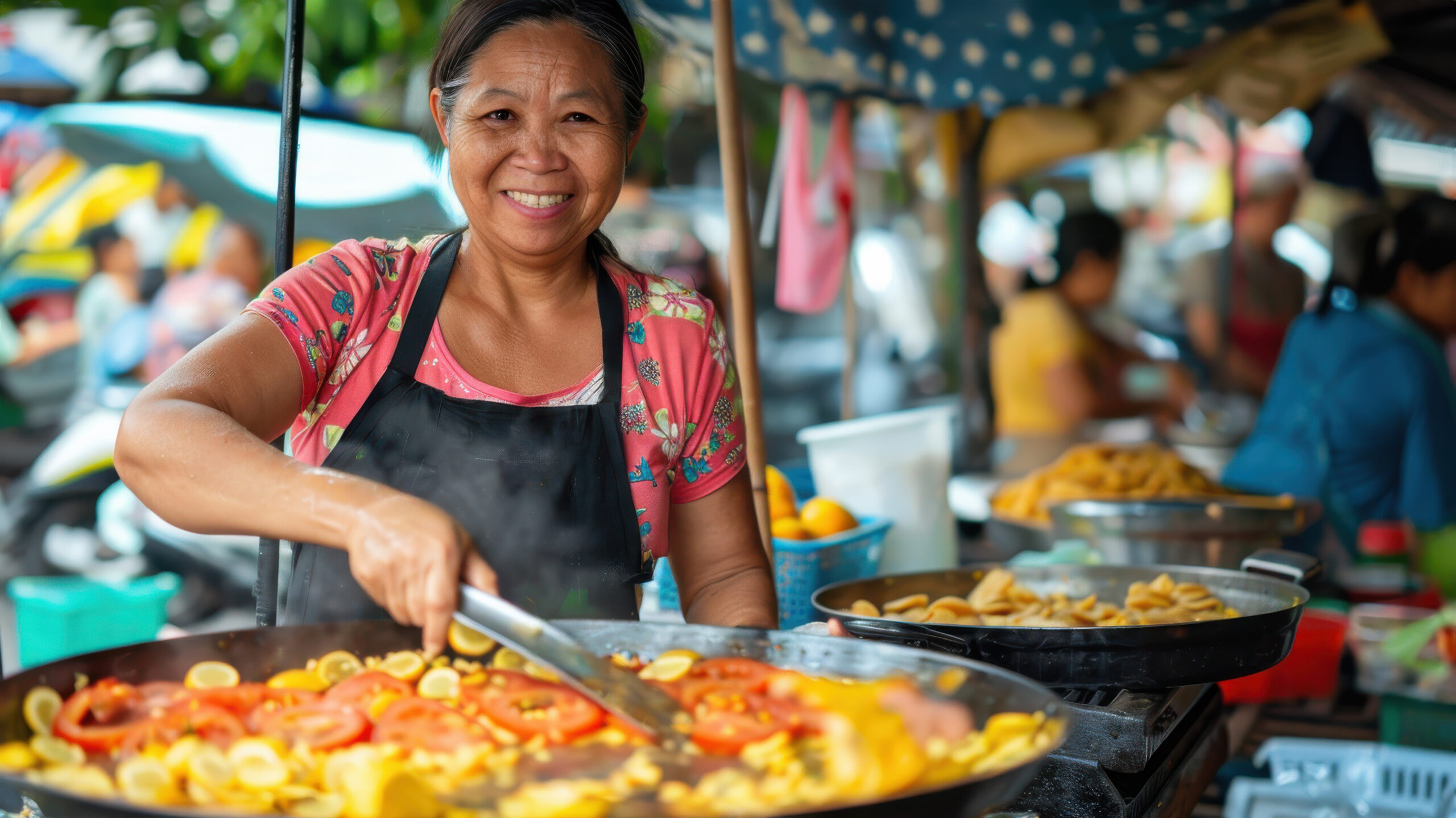
Filipinos have every right to be disappointed by history. It hasn’t exactly been kind — colonized, conquered, exploited, sold a dream of salvation that usually came with a price tag. And yet somehow, from all that wreckage, they built something incredible: a culture so saturated with kindness it borders on defiance. Hospitality here isn’t a performance; it’s survival. It’s how people make sense of the cosmic joke — to laugh, feed you, insist you sit, insist you eat again.
My first impression of Manila? Like walking onto the set of a post-apocalyptic Mad Max outpost — smoke, chaos, radiant heat, jeepneys coughing neon exhaust into skies already bruised with humidity and smog. A kind of beautiful hellscape powered by stubborn optimism and cheap gasoline. It’s loud, cracked, crumbling, and alive — a living, breathing monument to resilience. As my tuktuk bounced through the city streets I reflected on its odd paradox. You think you’re entering the aftermath of something terrible, but you quickly realize: this is the aftermath of everything—and people are still smiling.
“Kumain ka na ba?” is how you say hello in Manila —literally “have you eaten yet?”—and that greeting sets the frame for exploring how care, hospitality, and identity all run through the Filipino table.
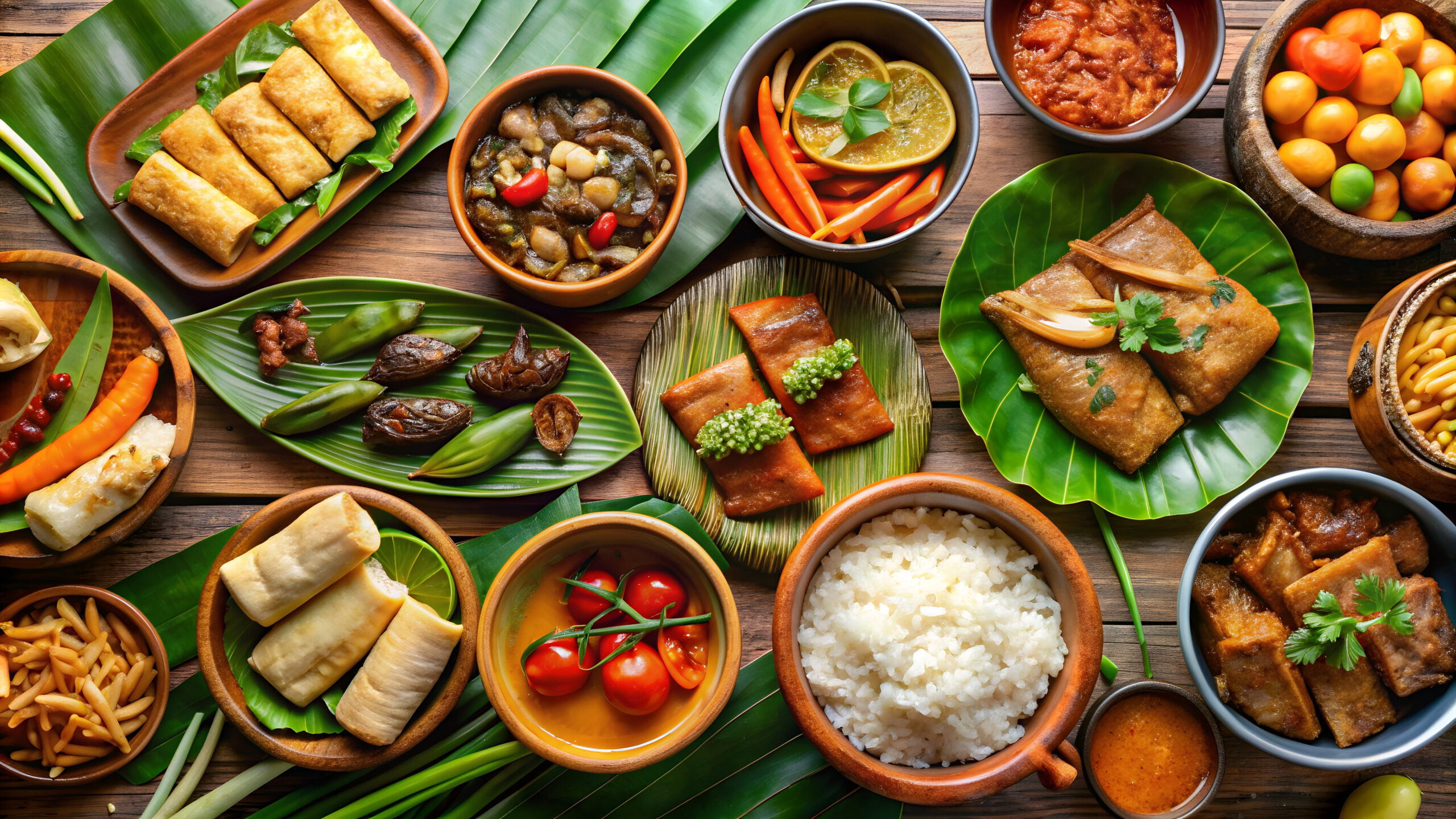
Certain dishes—sinigang, adobo, arroz caldo, leche flan—carry specific emotional charges, remembered as grandmothers’ or mothers’ recipes, so eating them in Manila can feel like stepping back into older, safer rooms.
Manila’s food culture is basically the city’s personality in edible form: loud, mixed, generous, improvisational, and wired into history. Food is how the capital tells you what it has survived and what it’s becoming next.
Manileños are a people who’ve been dealt crappy hands over and over, and yet still manage to show up kind, smiling, and generous. They take all the bad history, the broken promises, the bureaucratic screwups, and instead of turning inward and mean, they turn outward with food, jokes, and a seat at the table. It’s not that they don’t know how unfair it all is; they just refuse to let bitterness be the house special.
Elar’s Lechon, Quezon City
The undisputed king of Manila-style lechon. Family operation since the 1950s, located along Quezon Avenue near the Rotonda. The skin is razor-thin and shatters on contact. Meat is lean, smoky, and doesn’t need sauce — though their house liver sarsa is legendary. Order ahead for whole pigs.
Monchie’s Lechon, La Loma, Quezon City
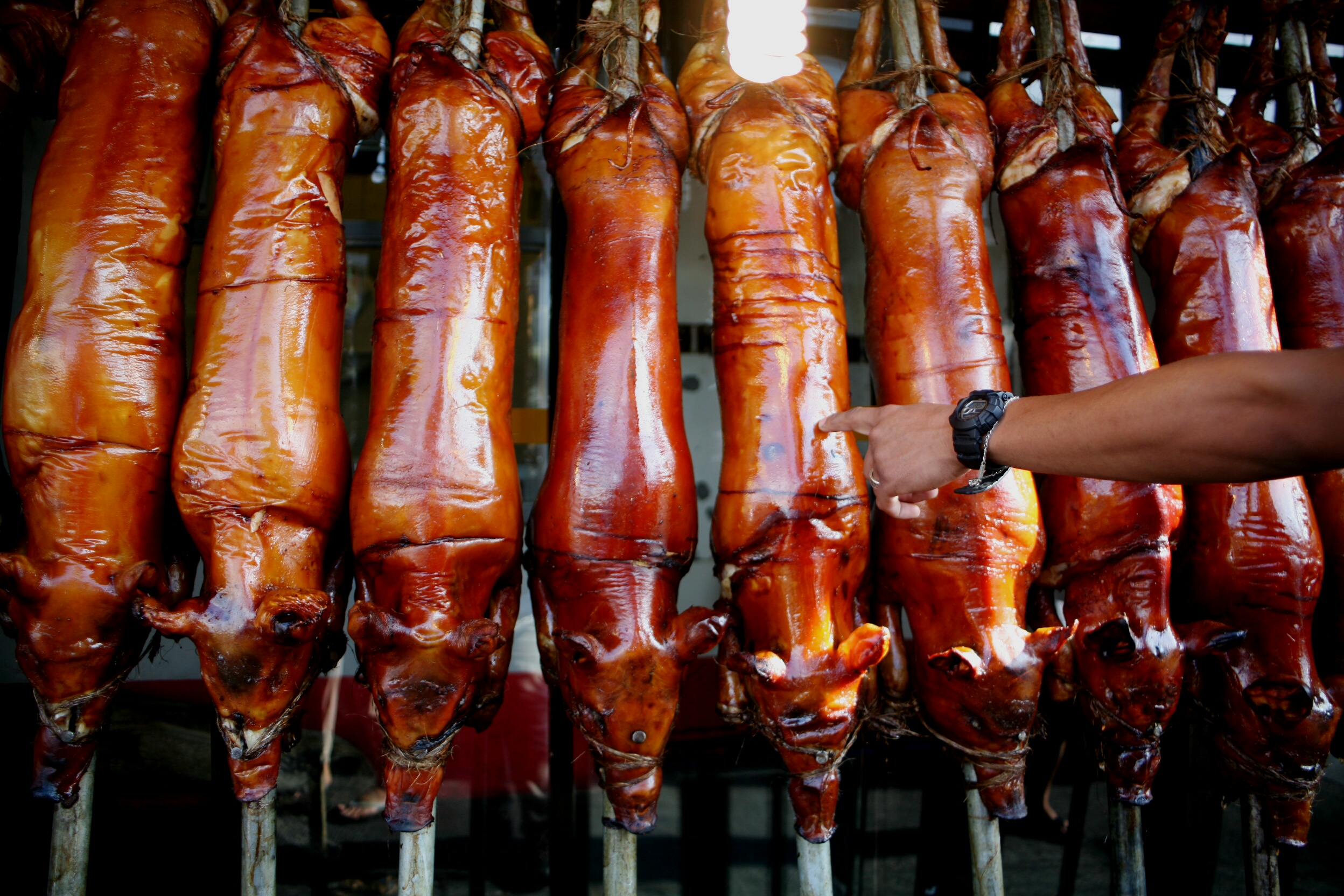
A La Loma institution right in the lechon capital of Metro Manila. Old-school charcoal roast method, deeply smoky flavor. The whole neighborhood has rows of pigs on spits spinning over coals – Monchie’s is consistently the one locals point you toward. More of a market-style experience than a sit-down.
Ryan’s Lechon, La Loma, Quezon City
Started as a chicharon stall and evolved into one of the most praised lechon stops in the La Loma strip. The skin has a deep red glaze, dripping with rendered fat, lemongrass-scented from the stuffing. Heavy, honest, no pretense. Best eaten standing up, plate in hand.
Rico’s Lechon, BGC / Glorietta / Makati
The Cebu-style ambassador in Manila. Stuffed with herbs and aromatics instead of relying on sauce — the flavor comes from inside the pig, not on top of it. Great entry point if you want to taste the Cebu method without leaving the city.
Lydia’s Lechon, Multiple Metro Manila Locations
The legacy chain, over 60 years old, 25+ locations across Metro Manila with delivery. Charcoal roasted, consistent quality, and the most reliable option if you need lechon by the kilo without committing to a whole pig. Not as transcendent as Elar’s, but the benchmark for everyday Manila lechon done right.
By TH