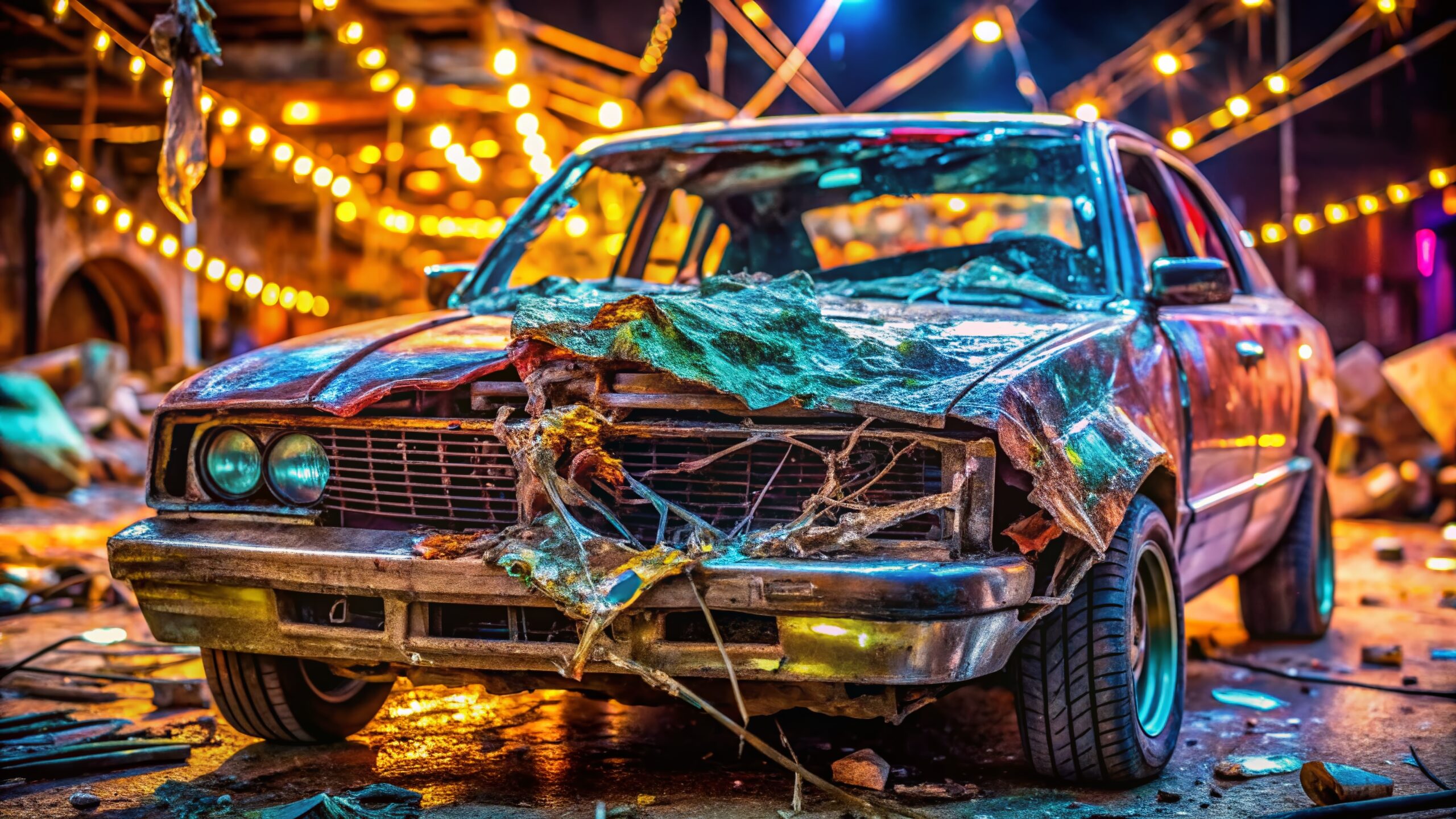
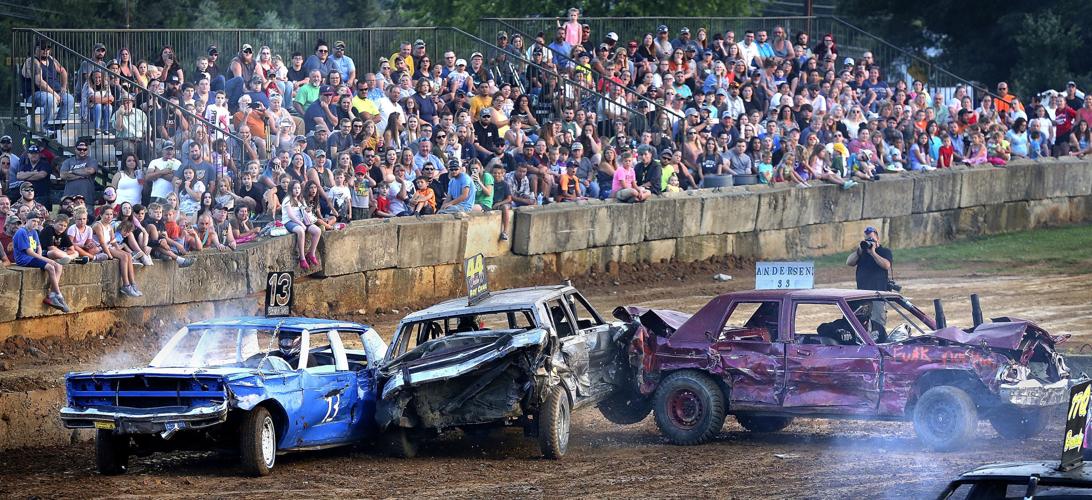
When I was a kid, Saturday mornings were a full‑body narcotic: cartoons on a cheap Zenith until the mind went soft, then the UHF ether hissed alive with something holy and deranged—the Demolition Derby. Those weren’t mere cars; they were dying beasts, rusted Fords and Chevys resurrected from scrapyard purgatory, patched with chicken wire and bad intention. When the green flag dropped, they screamed across the dirt like ghosts of Detroit laborers demanding a final encore.
A real derby isn’t nostalgia or sport; it’s defiance, a middle finger to safety ratings and suburban decay. Under fireworks and motor‑oil haze, working‑class drivers turn junk into brief legends and pain into noise. Which is why you and your overly‑civilized crew need to run one, now.
Derby culture still thrives where America keeps its callouses: the rural Midwest, the fairgrounds of the South, the beer‑soaked fields of nowhere towns that refuse to die. Places where people understand that creation and destruction are the same damn thing if you do them with enough heart. They turn rust into art, junkers into brief legends, and pain into noise. Writers and promoters describe derby culture as tied to rural aesthetics of rust, decay, and DIY ingenuity—turning old beaters into short‑lived gladiator machines. Analyses read the derby as a “rite of reversal” where working‑class drivers symbolically push back against corporate America by destroying its ultimate status symbol: the automobile.
Maybe that’s why the derby endures. Underneath our tech utopias and plastic futures, there’s still a part of us that craves the crash—something brutally honest, stripped of polish or pretense. A reminder that steel can still scream, that madness still has its place in the sun, and that somewhere out there, under the fairground floodlights, the real America is still slamming into itself, grinning through the smoke.
Why it works for a Rat Pack weekend
Derby weekend is a bucket‑list, bruise‑collecting, ego‑obliterating group ritual, with just enough danger to make the bar stories taste better. You can rent an entry car, thrash it under the lights, then leave its sorry carcass on the field and go find a fairground bar. It’s a grounded, grease‑stained contrast to your more polished Rat Pack trips—and it fits the ethos perfectly.
Where to stay
This one is less about destination hotel porn and more about proximity to the fairgrounds.
- Track‑adjacent motel – Five‑minute drive or stumble from the fair; minimal but functional, built for showers and sleep.
- Nicer chain hotel – A short drive away for crews that want clean sheets and good AC after they’ve been rattled around in a cage.
- Campground / RV – For full immersion, stay with the other maniacs who tow their rigs in and live in the pits all weekend.
Where to drink
- Fairground beer tents – Cheap beer, plastic cups, and you’re in the center of the chaos.
- Nearest small‑town bar – Find the roughest local bar within a 10–15 minute radius; it’s where the drivers and die‑hards will be.
- Post‑derby motel parking lot – Cooler, folding chairs, and your wreck still cooling in the distance.
Where to eat
- Fair food – Corn dogs, fry‑everything stands, BBQ, and funnel cake; eat enough to soak up adrenaline and beer.
- One “victory steak” joint – Have a pre‑picked local steakhouse or diner where you can sit down after the derby and relive the hits.
Cigars and where to light up
- Local smoke shop – Stock up near the fairgrounds before race day.
- Fairground outskirts / parking lot – Light up after your heat when you’re sure everything is cooled down and legal.
How to run the weekend
Day 1 – Arrival, sign‑in, and scouting
- Roll into town, check into your motel or campsite, and head straight to the track for tech inspection and registration.
- Walk the pits, talk to drivers, and get a feel for classes, rules, and what kind of builds you’re up against.
- Hit a local bar that night for a low‑key warm‑up and to listen to bench‑racing.
Day 2 – Derby day
- Get to the grounds early to top off fuel, double‑check belts, helmets, and safety gear, and attend the driver meeting.
- Run your heat—drive hard, keep your nose clean, and try not to get center‑punched too early.
- If you make the main, adjust whatever you can in the pits and go again; if not, become the loudest pit‑crew/cheering section in the stands.
- Post‑derby, leave the broken car with the promoter per your rental deal, then hit the bar or parking‑lot tailgate for cigars and recap.
Day 3 – Brunch and bruises
- Sleep in, then find a proper greasy‑spoon brunch to nurse bruises and replay the hits.
- Drive home with new respect for seatbelts and the physics of full‑speed stupidity.
Quick planning tips
- Where to run: County fairs across the Midwest, Northeast, and South still pack stands for derby nights; many shows are promoted by outfits like Smash It, Hard Core Derby Promotions, Derby Icons, and others.
- How to enter: Regional promoters publish rulebooks, event calendars, and registration forms so you can enter directly and ask about classes, safety, and car eligibility.
- Renting vs building: Many promoters or local builders offer “rigs” to rent for a flat fee (plus deposit), bundled with entry; search for “turn key derby car” or “car for rent” on derby forums and Facebook groups.
- Gear: Expect to supply your own helmet, neck protection, gloves, and fire‑resistant clothing depending on rules; read the rulebook carefully.