
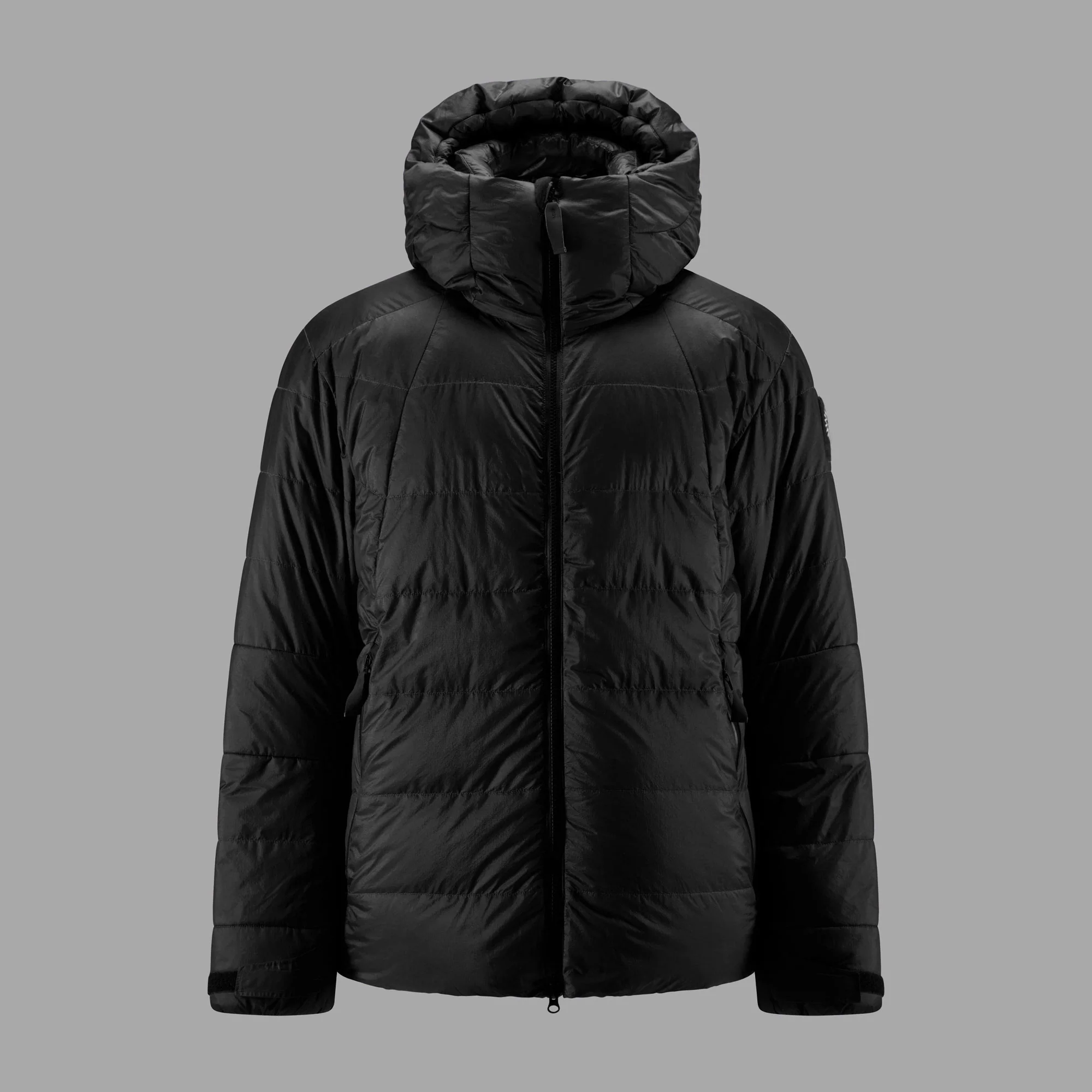
The world’s warmest jacket for its weight. Expedition-tested by Louis Rudd MBE. Polar-proven performance built for the extremes.
Born from four years of development and proven in Antarctica, the Titan Down Jacket is the world’s warmest jacket for its weight. Weighing just under 1kg (size M) and loaded with 337g of 850 fill power, 90/10 RDS-certified goose down, the Titan is engineered for those who demand absolute performance in the planet’s most hostile environments.
End‑of‑the‑world armor for nights and latitudes where being cold stops being uncomfortable and starts being dangerous.
You don’t buy a Titan Challenger because you’re “a bit chilly in winter”; you buy it because you’ve finally admitted that some of the places you’re going don’t care if you come back.
After one too many nights where the wind cut through lesser jackets, you started looking at expedition hardware designed for whiteouts, polar plateaus, and the kind of Antarctic fieldwork Shackleton tests this stuff against. The Titan showed up like contraband from a scientific outpost—big baffling, serious hood, no fashion apologies, the sort of thing you shrug into when the forecast stops using real numbers and starts talking about “feels like.” First true baptism: a black, wind‑hammered shoreline where the sea spray froze on contact and your breath came out in sheets; you zipped the Heat Halo up, buried your face in the hood, and felt the world go quiet while the jacket took the hit.
Heat is immediate and aggressive—this is not a “walk around the mall” puffer; it’s a mobile survival shelter that will roast you on city streets but feels perfectly calibrated when the wind is trying to move you sideways. Box‑wall baffles mean the down actually lofts instead of getting pinched; fewer cold spots, more consistent warmth when you’re standing still on ice, decks, or ridgelines wondering why normal people go to beaches. Pertex Shield and Diamond Fuse shrug off snow, spindrift, and light, freezing precipitation; for true, driving rain you still throw a shell over it—but by then, you’re already pushing into “what am I doing here” territory. Climashield Apex in the elbows, cuffs, and hood means the usual wear points don’t go flat and useless after a season of shoving through doors, railings, zippers, and pack straps. Pockets are serious: double‑baffled hand pockets that act like personal furnaces, plus big internal stash zones for gloves, batteries, and whatever you can’t afford to let freeze.
The Stash is for gear that lets you push further than common sense says you should; this isn’t outerwear, it’s a permission slip to treat hostile weather like set dressing. The Blackout earns its hanger because it lets you stand in places and at hours where even locals stay indoors—frozen docks at 3 a.m., polar wind tunnels, winter sea crossings—and still move, think, and function like a human instead of prey. You reach for it when the plan involves cold that eats batteries, freezes metal, and empties streets—a jacket for when “bad weather” isn’t an inconvenience, it’s the entire point of being there.