For several years I worked for a Swedish-based software company. I got to know Stockholm well.
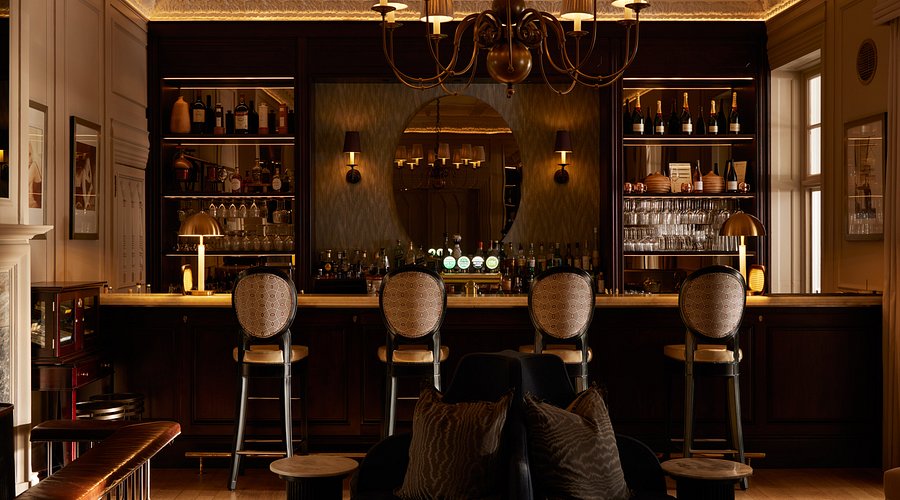
The lie of night is that it ends when the lights come up. In Stockholm it only changes shape. My usual hotel, Berns, is where we start, a chandeliered illusion that someone once designed to make rich men feel immortal. You take a drink there because that’s what the room demands—something aged and patient—and I stare into its amber like it might hold an excuse. It doesn’t. Nothing worthwhile ever does.
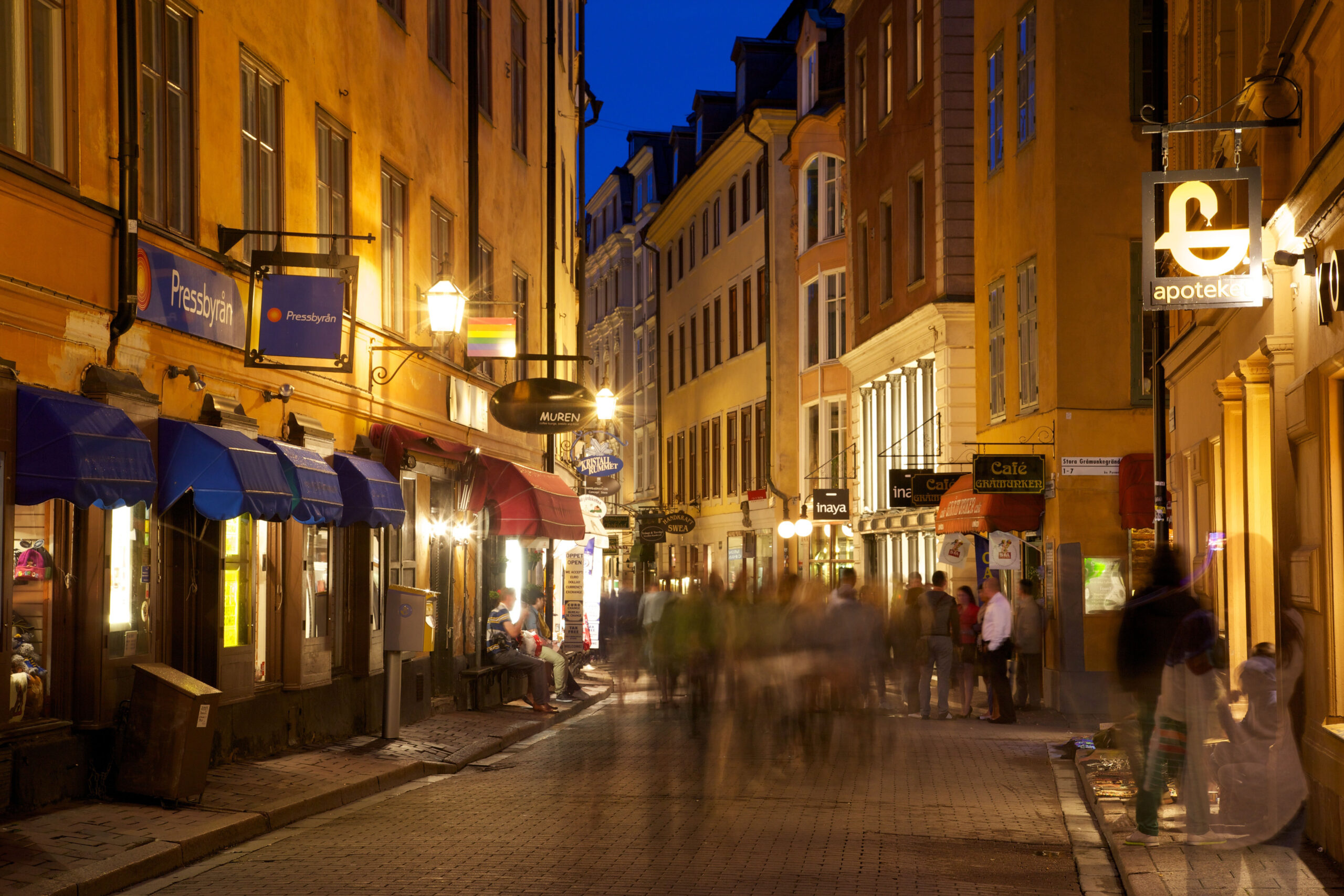
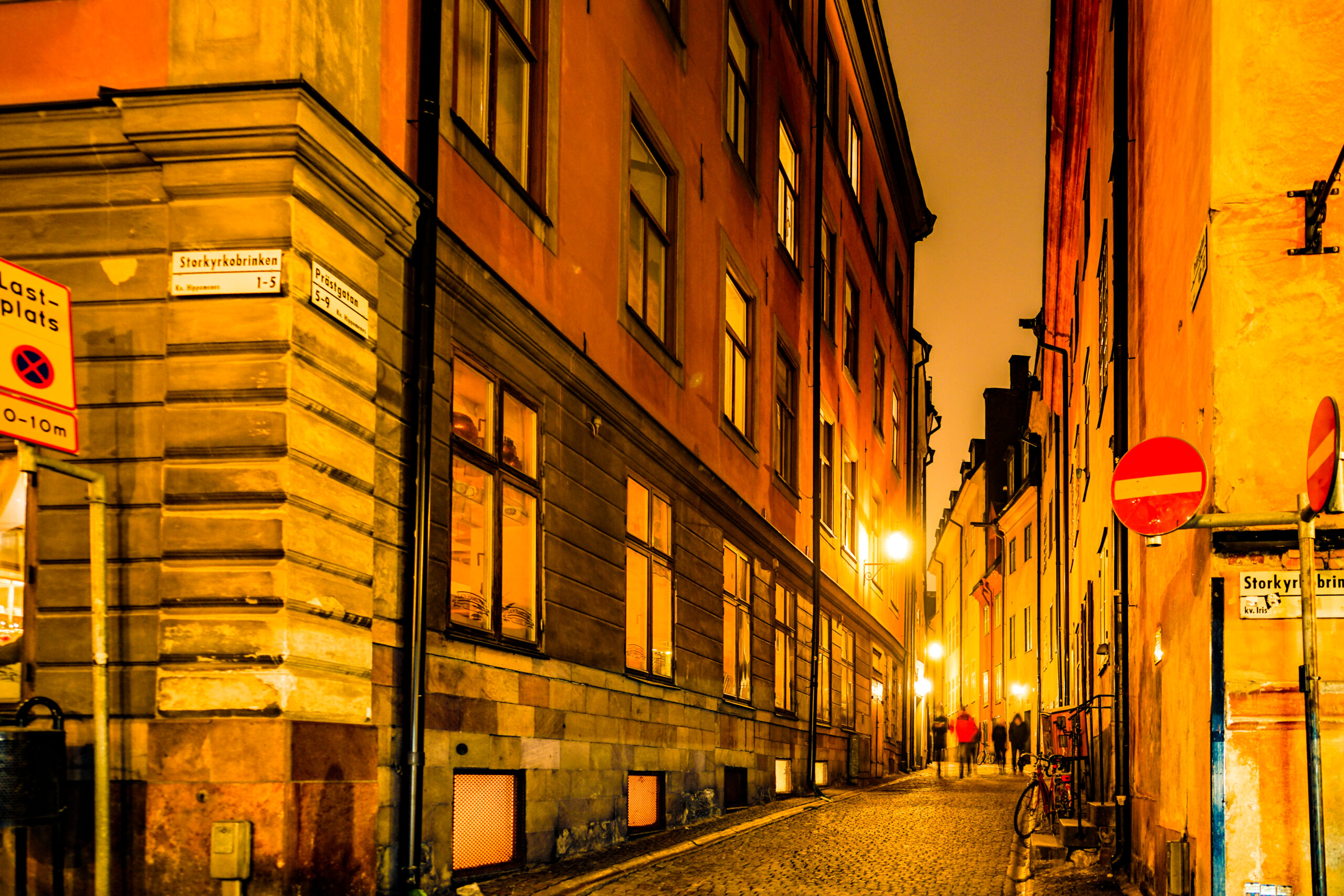
Outside, Norrmalm is still dressed for company. The streets are clean, the façades composed, the city pretending it’s a reasonable place. I know better. I cross the water through Gamla Stan, past crooked stone that has seen worse men than me stagger home, past souvenir shops and shuttered doors that will tell no tales in the morning. The air has that thin Scandinavian clarity that makes sin feel like a clerical error instead of a crime.
Södermalm rises ahead, the island that learned how to shrug. Slussen, Medborgarplatsen: bars stacked like a house of cards, neon and signage, voices leaking out through door cracks. I duck into a small place whose name I’ll forget before I finish my second beer. Indigo, or something that sounds like it. It’s narrow, unpretentious, the kind of bar that doesn’t bother with decor because it already has regulars. Early-night flirtations bloom like bruises—slow, then all at once. People watch each other with that tired, hungry civility you only get in countries that pretend nobody’s desperate.
The women here know the score. Stylish, self-contained, they wear independence the way other people wear cologne. You offer a line that sounds like you, not like the internet, and you’ll get a look, maybe a half-smile, a test question delivered in perfect English. Come in cocky or sloppy and you’re dismissed with surgical precision. No scenes, no theatrics—just a door closing in the middle of a crowded room.

The trick in Söder isn’t finding a place—it’s knowing when to leave it. Nights here don’t crescendo; they drift, like cigarette smoke curling toward a ceiling no one looks at anymore. I finish the beer before it gets warm, because warm beer feels like a confession, and I’m not in the mood to tell the truth.
Back out on Götgatan, the city has loosened a button or two. The conversations get louder, the laughter less polite. A group spills out of a bar, all angles and good coats, their vowels clipped and efficient even when they’re drunk. Somewhere, bass leaks through brick—low, persistent, like a second heartbeat under the street.
I follow it without thinking. You always do.
Down a side street, then another, past a kebab place still doing business like it’s noon instead of whatever hour we’ve slipped into. The door I’m looking for doesn’t announce itself. It never does. A nod from a guy who’s seen everything and forgotten most of it, a quick assessment—shoes, eyes, posture—and then I’m inside.
It’s darker than it should be, louder than it needs to be. The kind of place where time folds in on itself and you lose track of who you were when you walked in. Drinks come faster here, less ceremony, more intent. Vodka, maybe. Something local if you want to pretend you’re participating instead of just passing through.
Faces blur, but patterns don’t. The same dance, different city: proximity, retreat, the negotiation of interest without ever naming it. Stockholm does this better than most—controlled chaos, like everyone agreed on the rules but won’t admit it.
I catch a look from across the room. Not an invitation, not a rejection—just recognition. You’re here, I’m here, let’s see if either of us deserves the next five minutes. That’s all it ever is, anywhere worth being.
We talk. About nothing, which is to say everything that matters in a place like this. Travel, maybe. Work, but only the version you tell strangers. She laughs once, sharp and genuine, and it cuts through the music like a clean line of code. For a second, the night feels honest.
It passes. It always does.