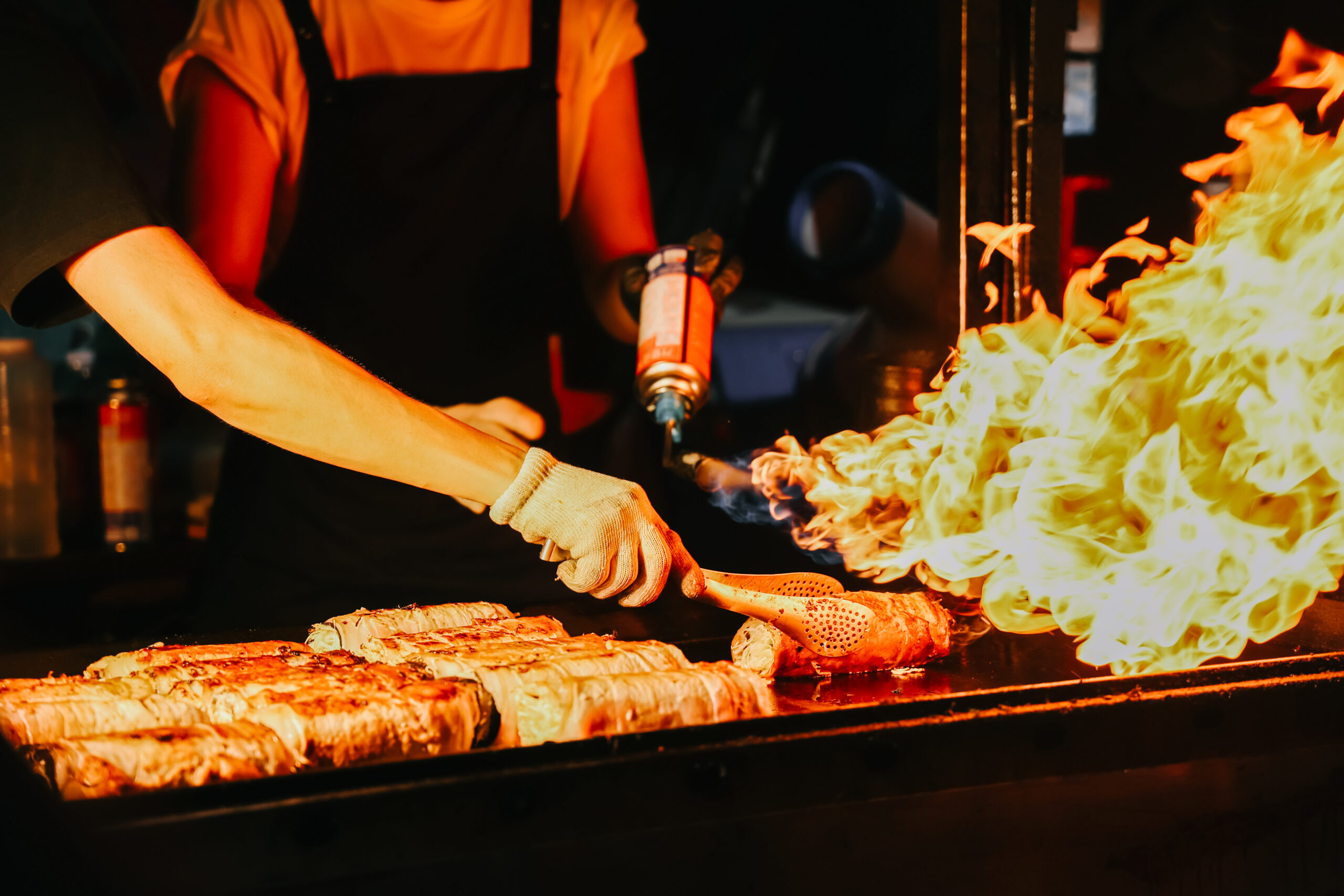
Street food is some of the most delicious and revelatory food in the world because it’s cooked by people who aren’t trying to impress a Michelin inspector—they’re trying to feed their neighbors, fast and well. In a good street stall, you learn more about a city in ten greasy minutes than you will in three days of museums and white tablecloths. It’s where the truth lives—loud, cheap, imperfect, and absolutely unforgettable.
But, you need to be mindful of what you’re eating. Sometimes, things can go south. This goes by many colorful names, including Montezuma’s Revenge, tourista, Delhi belly, Hong Kong dog, Gyppsy tummy, Aztec two-step, Rangoon runs. All mean the same thing: acute traveler’s GI issues. You consumed something contaminated.
I’ve traveled enough, eaten at enough sketchy street stands and off-map kitchens to learn a few things about avoiding a day in porcelain purgatory These tips will help you safely eat off the street anywhere on the planet where good things are hissing, sputtering, smoking, and dripping fat onto concrete.
How to pick the good carts
Follow the locals. The real ones — moms with kids, cab drivers wolfing down lunch, office workers in wrinkled shirts on their break. The crowd isn’t just a sign of good flavor; it’s turnover. Turnover means the food hasn’t been sitting in the danger zone long enough to hatch new life forms. If they’re queuing in Singapore for chicken rice, crowding a taco stand in DF, or shoulder‑to‑shoulder over khao kha moo in Bangkok, that’s the sermon you listen to.
Trust the specialists, the obsessives. The cart that only does phở, only does takoyaki, only does jollof with grilled fish, is usually safer and better than the desperate general store selling burgers, shawarma, pad thai, and pizza under one sad awning. The guys doing one thing — maybe two — and doing them like it’s religion.
Do the nose test. If it smells like smoke and char and sizzling fat, you’re good. If it smells like a garbage truck in August, walk away. Clean-ish setup, food covered, no fly orgy happening over the condiments — that’s your baseline.
Hot food should be hot, cold food cold. Eat what’s cooked to order, served with fire still in it. Lukewarm is the temperature of regret. Freshly fried bhaji, noodles tossed in a screaming wok, skewers pulled straight off the grill—yes. Tepid mystery stew sweating in a dented pot all afternoon—no.
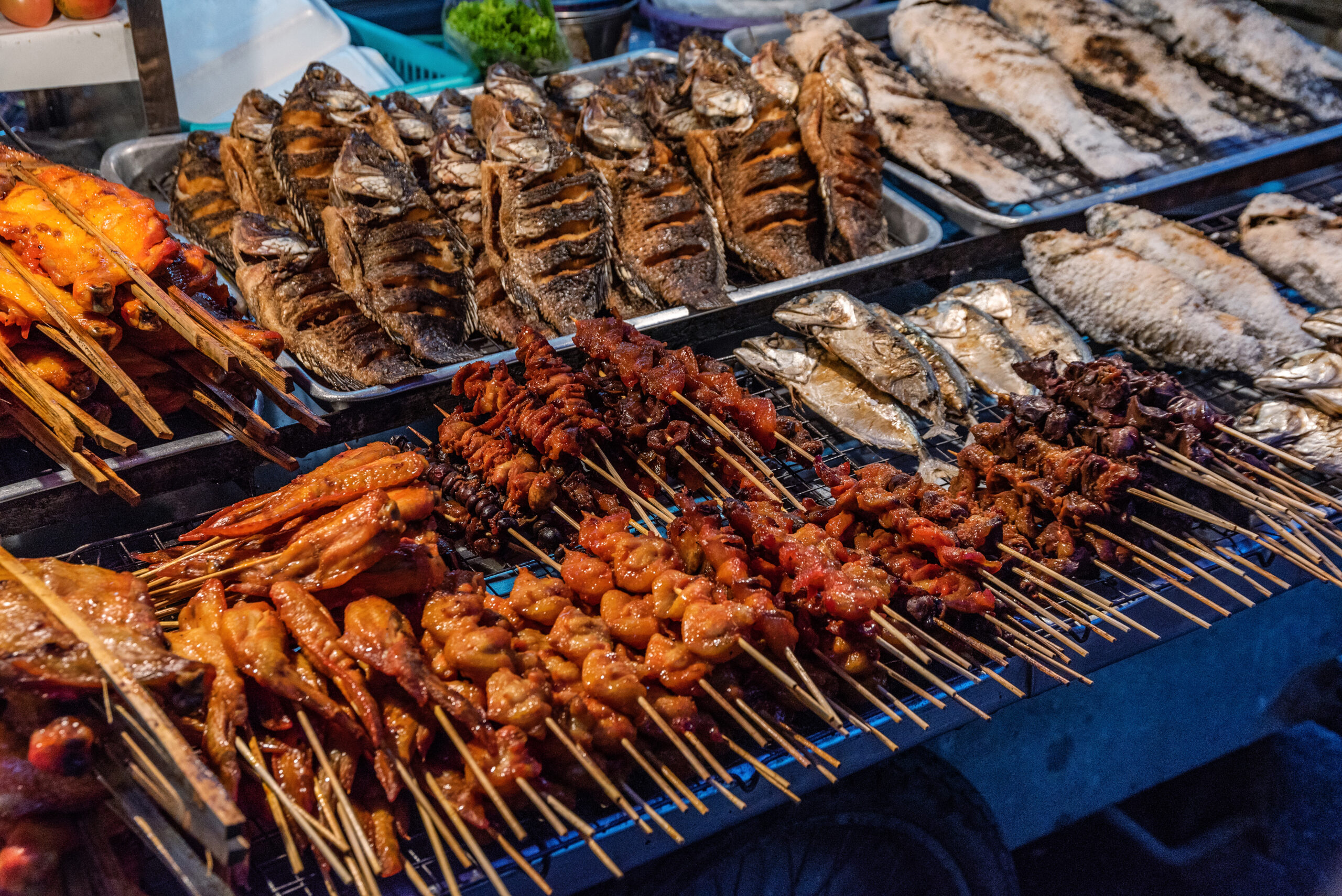
Red flags in any country
Street seafood can be transcendent—oysters on a curb in France, grilled squid in Vietnam, ceviche in Peru—but if you don’t see serious turnover and real ice, you’re volunteering for a science experiment.
Treat communal sauces like loaded weapons. That room‑temperature chili slurry, mayo, or crema sunbathing on a plastic table in Manila, Nairobi, or Mexico City? If it’s crusted over or looks tired, you’re not proving courage by eating it; you’re proving you don’t value tomorrow.
Anything just sitting there in the sun—meat trays, wilted herbs in gray water, rice clumped into geological formations—is the universe politely asking you to walk away.
Keeping your gut on your side
Most so‑called “Montezuma’s Revenge stories start with dirty hands, not dirty noodles. Hit the sink, the sanitizer, the wet wipes before you grab that bun cha, pani puri, or arepa.
Watch the choreography of money and food. The pros in Hanoi, Oaxaca, or Istanbul have a system: one person on cash, another on the grill, or at least a towel and some kind of ritual between bills and bread. If the same fingers that just palmed sweaty banknotes are now lovingly caressing your tortilla, keep walking.
Stick to bottled or sealed drinks. Ice is a gamble. So is tap water.
Time, place, and politics of the line
Eat when the city eats. Morning jianbing in Beijing, lunchtime thalis in Delhi, late‑night suya in Lagos—crowds at local hours mean the food hasn’t had time to turn on you.
Follow the locals, not the tour groups. A packed stall with no English sign in Athens or Saigon is usually a better, safer call than the “famous” stand laminated in guidebooks and ringed with selfie sticks.
Street food isn’t just cheap calories; it’s how a city talks to you when it thinks you’re actually listening. It’s political, economic, intimate—people feeding each other in public, on the margins, with pride. You’re not just buying dumplings; you’re buying a front‑row seat to how they live.
Exit strategy and mindset
Carry the basics—Imodium, rehydration salts, whatever lets you get back in the game instead of spending your trip on the crapper.
And if the vibe is wrong—a bored vendor, dead stall in a busy market, rancid smell under the spice—trust your instincts. There’s always another cart, another alley, another bowl of something you can’t pronounce yet that might just change how you see the world.
Street food is some of the most delicious and revelatory food in the world because it’s cooked by people who aren’t trying to impress a Michelin inspector—they’re trying to feed their neighbors, fast and well. In a good street stall, you learn more about a city in ten greasy minutes than you will in three days of museums and white tablecloths. It’s where the truth lives—loud, cheap, imperfect, and absolutely unforgettable.
But, you need to be mindful of what you’re eating. Sometimes, things can go south. This goes by many colorful names, including Montezuma’s Revenge, tourista, Delhi belly, Hong Kong dog, Gyppsy tummy, Aztec two-step, Rangoon runs. All mean the same thing: acute traveler’s GI issues. You consumed something contaminated.
I’ve traveled enough, eaten at enough sketchy street stands and off-map kitchens to learn a few things about avoiding a day in porcelain purgatory These tips will help you safely eat off the street anywhere on the planet where good things are hissing, sputtering, smoking, and dripping fat onto concrete.
By TH