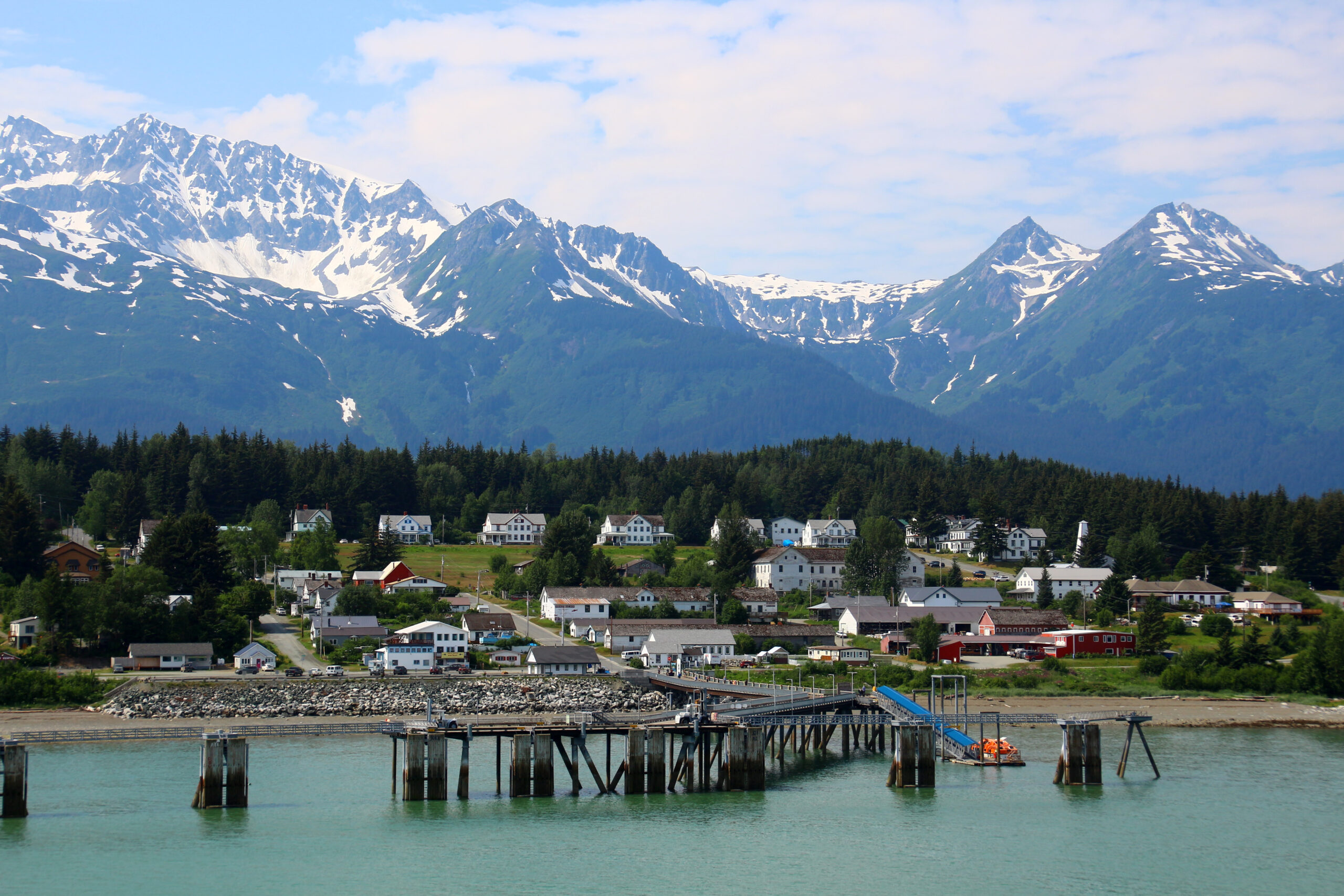
The hamlet sits on the shores of the Lynn Canal, a long, glacial fjord where mountains rise straight out of the water and the weather comes on like a mood swing.
The town is small—only a few streets, no stoplights, 2,500 souls give or take—but it feels bigger than itself, inflated by the surround of peaks, forest, and cold sea.
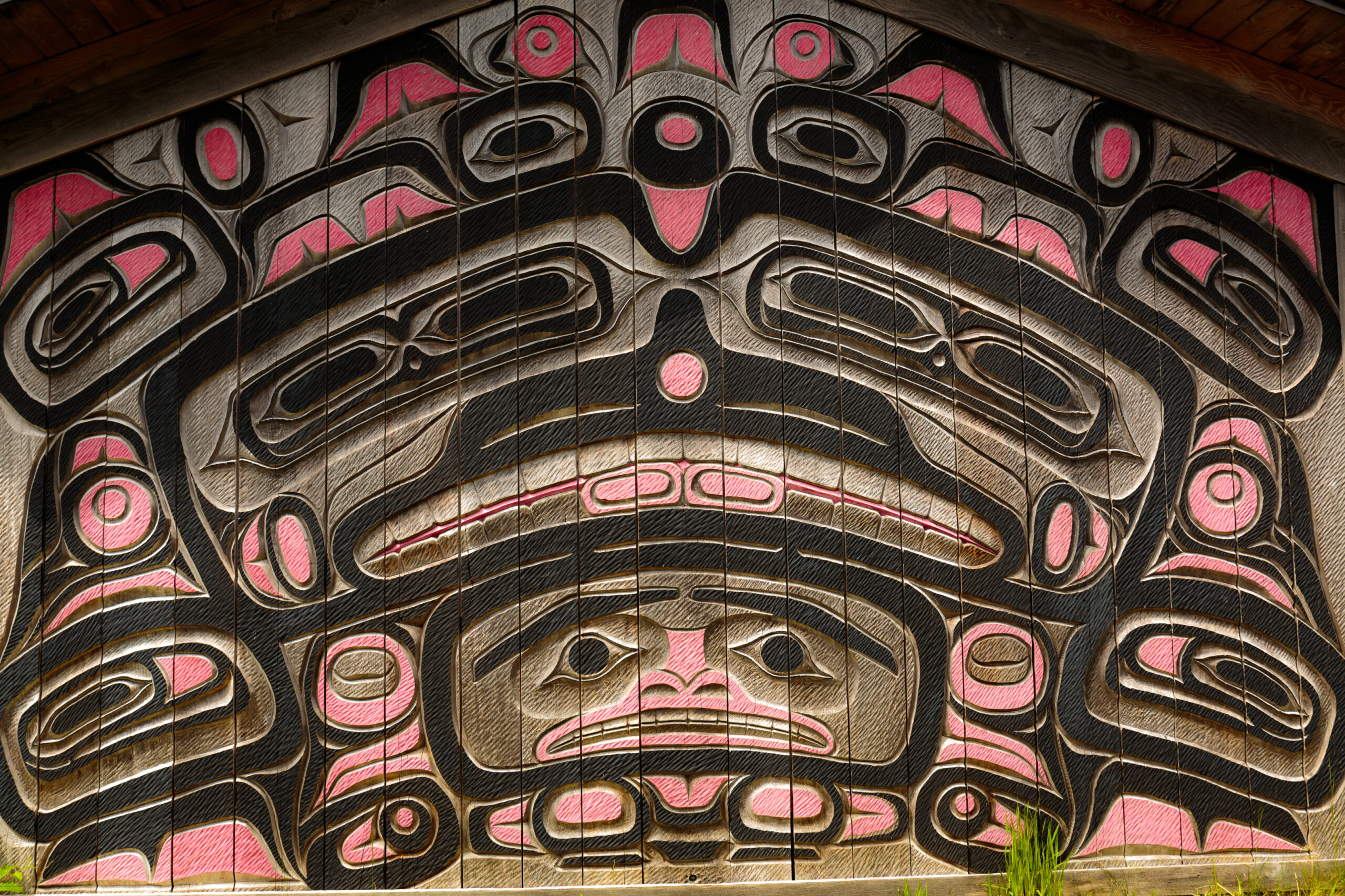
Long before anyone called it Haines, the Tlingit knew this place as Deishú, the end of the trail, a last stop between the hinterlands and salt water.
Missionaries, gold fever, salmon canneries, and an old Army outpost called Fort Seward layered on afterwards, leaving weathered wood, rust, and stories that never quite made it into the brochures..
Klukwan is organized around the classic Tlingit two‑moiety system: Raven and Eagle/Wolf, with specific local clans that anchor the village’s identity and history.
Haines is essentially the front porch to Klukwan, the “eternal village,” where Chilkat Tlingit clans still live their language, clan system, and ceremonial life as they have since time immemorial. The Tlingit’s have been in this very spot for somewhere between 4,500 and 10,000 years.
If they had one, the Haines chamber of commerce would sell the town as scenic—bears on the river, eagles by the hundred over the Chilkat, hikers and cruisers chasing some manageable bite of wild.
But walk it slow and you feel something else: the semi-isolated hush of a town at the edge of the map, given as much to the gutter as to the gods, surviving on tourism, stubbornness, and the strange metaphysical charge of simply hanging on here.
I am in town for a personal reason: I am being adopted by the Tlingit tribe of Klukwan. At a potlatch I am given the Tlingit name Góoch éesh (“wolf father”) and a beautiful vest with wolf image beadwork.
Haines is an oddball, human-scale town.
“Downtown” is a few streets of galleries, cafés, harbor, local breweries, and the unapologetically weird Hammer Museum—the world’s only museum dedicated purely to hammers.
Fort Seward’s old Army buildings now hold art studios, inns, and bars, so you drink and wander through a half-ruined parade ground with the mountains leaning over your shoulder.
I am here this time in spring which means only one thing hereabouts: the Hooligan Run.
The hooligan run is the huge spring migration of eulachon—small, oily smelt also called hooligan or candlefish—from the open ocean into coastal rivers like the Chilkat and Chilkoot around Haines, Alaska, to spawn. Hooligan are anadromous fish, meaning they live in the ocean but swim upriver in massive schools each spring to reproduce, turning stretches of water into a dense, moving ribbon of silver.
For Indigenous peoples such as the Tlingit in the Haines–Klukwan area, hooligan have long been a vital subsistence resource, harvested with dip nets, rakes, and traps as one of the first major food sources of spring. The run is also a critical early-season food pulse for predators: gulls, sea lions, eagles, seals, and occasionally whales gather in striking numbers to feed on the fish.
Hooligan are eaten fresh, often fried whole, baked, smoked, or dried, taking advantage of their very high oil content. Families freeze, smoke, and dry them for year‑round use, serving them as everyday meals and at gatherings
First daylight during the frenzy brings out Chilkoot dip-netters, a loose order of true believers and warriors, standing ankle-deep in glacial runoff, swearing, smoking, cracking jokes as they drag forever out of the river and into beat-up plastic totes.
Soon it will be summer and salmon, and tourists looking for kayaking, hiking, and long blue evenings.
Winter flips to Stockholm-like darkness, steep backcountry skiing, the Bald Eagle Festival, and a small-town scene that doesn’t disappear when the ships do.
Where is it?
- Haines/Klukwan sits in the Chilkat Valley on the banks of the Chilkat River, roughly 21–22 miles northwest of Haines along the Haines Highway and about 18 miles south of the Canadian border.
- Klukwan village is within the upper Inside Passage region, adjacent to the Chilkat Bald Eagle Preserve, with mountains and river flats crowding close.
How far is it?
- Juneau to Haines is roughly 75–95 miles, and you hop between them by bush or seaplane or by boat, not by road.
- By air: About 70 miles between Juneau International (JNU) and Haines Airport (HNS), with a flight time of roughly 35–40 minutes.
- By water: Haines sits about 75–94 miles north of Juneau along Lynn Canal, depending on route.
How to get there
- Small commuter flight: Alaska Seaplanes and similar outfits run multiple daily hops Juneau–Haines; it is the fastest and most weather-sensitive way in and out.
- State ferry: The Alaska Marine Highway System runs car ferries between Juneau and Haines several times a week; crossings run on the order of 5–7 hours and you can bring a vehicle.
- High-speed day boat: In summer, operators like Alaska Fjordlines run a faster, scenic passenger-only run between Juneau, Haines, and Skagway, often doubled as a wildlife/whale-watching trip.
Things to know
- No road: Juneau is roadless; any “driving distance” assumes a long detour via Canada and is not a simple point-to-point drive.
- Booking: For shoulder-season or winter, check ferry and flight schedules closely; summer adds more frequency and the tour boats, but seats and deck space go fast
- The name “Klukwan” comes from the Tlingit “Tlakw Aan,” often translated as “Eternal Village” or “The Village That Has Always Been,” reflecting a history that predates the non-Native towns on Lynn Canal.
- Klukwan is renowned for Chilkat weaving, clan treasures, and the Jilkaat Kwaan Heritage Center, which houses at.oow (sacred clan property) and hosts cultural tours that open a tightly guarded world just a crack to visitors.
Big nature without big crowds
- Haines is where serious wild, deep culture, and an almost old-town quiet all stack up in one small, reachable place.
- You get bald eagles by the hundreds on the Chilkat, brown and black bears working salmon on the Chilkoot, and a fjord coastline without the cruise-ship crush of Juneau or Skagway.
- The landscape is tight and cinematic—Lynn Canal, glacier-cut valleys, mountain goats on the ridges—and you can reach most of it on day trips instead of epic expeditions.
Chilkat Tlingit culture next door
- The Jilkaat Kwaan Heritage Center and village tours crack open Chilkat weaving, clan treasures, and river life in a way you almost never get in cruise-port Alaska. If you’re dreaming about edge-of-the-map communities, Haines and Klukwan is a stunningly beautiful case study on how a place rides tourism, subsistence, and old stories all at once.
Field Notes: Haines & Klukwan, Alaska
Haines is the quieter, stranger, more local-feeling alternative to Skagway: mountains, Lynn Canal, old Fort Seward atmosphere, fishing-town energy, craft beer, distillery cocktails, and just enough bars to find the town’s pulse.
How to get there
Best all-around route: fly to Juneau, then take a short regional flight to Haines on Alaska Seaplanes; Alaska Seaplanes lists Haines service up to 7 times daily in summer and 3 times daily in winter, with Juneau-Haines flight times around 35 minutes on its seasonal schedules (Alaska Seaplanes, Alaska Seaplanes schedule).[flyalaskaseaplanes +1]
Best scenic route: fly to Juneau, then take the Alaska Marine Highway ferry to Haines; AMHS runs year-round passenger and vehicle service and connects Haines with Southeast Alaska, Bellingham, and Prince Rupert routes (Visit Haines ferry schedules, Alaska Marine Highway route guide).
Best Skagway add-on: take the Haines-Skagway Fast Ferry in summer; it is passenger-only and takes about 45 minutes between the two towns (Visit Haines ferry schedules, Alaska.org).
Best road-trip route: Haines is on the road system via the Haines Highway, so you can drive in from Anchorage or Fairbanks through Canada if you want the big overland approach.
Where to stay
Hotel Halsingland: stay here if you want character; it’s in Historic Fort Seward, with old Alaska atmosphere, mountain-and-fjord setting, and historic architecture.
Captain’s Choice Motel: ( I always stay here) best practical local pick if you want views, walkability, and easy logistics; it offers free transfers to and from the airport, cruise dock, or ferry terminal, and it’s locally owned near Main Street, museums, restaurants, shopping, and the fjord.
Aspen Suites Hotel Haines: best modern, low-friction option; it has kitchenette studio suites and sits near downtown between the ferry terminal and airport.
Cabins/lodges outside town: choose this if you want forest, quiet, and space; Visit Haines notes cabins and lodges sit outside downtown along routes like Haines Highway, Lutak Road, Mud Bay Road, and Beach Road.
Where to eat and drink
Bamboo Room & Pioneer Bar: classic first stop; the restaurant is known for halibut and chips, and the attached Pioneer Bar has the kind of old-bar history you want in a place like Haines (Bamboo Room & Pioneer Bar, Frommer’s Haines restaurants).
Mountain Market & Café: go for coffee, breakfast/lunch, sandwiches, soups, baked goods, and the daytime local hangout feel; Travel Alaska specifically calls out its locally roasted coffee (Travel Alaska local guide, Frommer’s Haines restaurants).
Haines Brewing Company: essential for a casual pint and conversation; Visit Haines highlights Haines Brewery as one of the town’s notable local craft-drink stops.
Port Chilkoot Distillery: the cocktail stop; Visit Haines lists it among the town’s award-winning spirits makers, and it’s near Fort Seward (Visit Haines bars and breweries, Visit Haines Port Chilkoot Distillery).
Lighthouse Restaurant / Harbor Bar: a solid harbor-side local-feeling option; Frommer’s calls The Lighthouse a local favorite with some of the best views in town.
Where to meet locals
Pioneer Bar: start here after dinner at Bamboo Room; it has the old Haines bar-story atmosphere and is specifically described as a locals-and-visitors “home away from home” kind of place.
Haines Brewing Company: go late afternoon rather than late night; small-town breweries are better for real conversation before everyone scatters
Port Chilkoot Distillery: sit at the bar, not a table; it’s a better setting for talking with bartenders, travelers, and locals drifting through Fort Seward.
Haines Farmers Market: if you’re there in summer, go Saturday morning at the Fairgrounds; Visit Haines says it’s specifically a good opportunity to buy local food, arts, crafts, and “meet the locals”
Southeast Alaska State Fairgrounds: check what’s on before you go; the fairgrounds host the Southeast Alaska State Fair, Beerfest, markets, and year-round community events (Southeast Alaska State Fair, Visit Haines Southeast Alaska State Fair).
Beerfest weekend: if you want maximum local/social density, the Great Alaska Craft Beer Festival is the move; the next listed date is May 23, 2026, and the event dates back to 1992 as Alaska’s oldest craft beer festival.[visithaines]
My suggested version of the trip
Stay 3 nights: fly into Juneau, take Alaska Seaplanes or the ferry to Haines, stay at Hotel Halsingland for atmosphere or Captain’s Choice for convenience, drink at Port Chilkoot and Haines Brewing, eat at Bamboo Room and Mountain Market, and make sure one morning is a farmers market or fairgrounds/event morning. If you want the trip to feel more like a story than a checklist, arrive by ferry, leave by small plane, and give yourself one unplanned night at the bar.